

West Asia Crisis: Iranian Foreign Minister Dials EAM Jaishankar
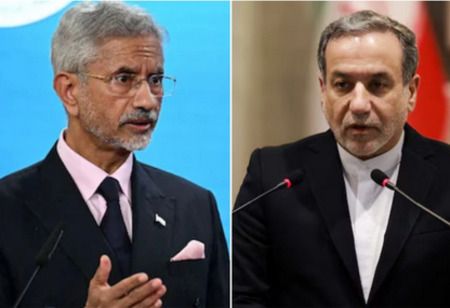
The Minister of External Affairs, S Jaishankar, engaged in conversations with the Iranian Foreign Minister, Abbas Araghchi, and the Qatari Prime Minister, Sheikh Mohammed bin Abdulrahman bin Jassim Al Thani, regarding the conflict in West Asia.
The discussions involved the recent ultimatum issued by US President Donald Trump to Iran, demanding the reopening of the Strait of Hormuz.
The Minister of External Affairs also engaged in a telephonic discussion with the Foreign Minister of the United Arab Emirates, Sheikh Abdullah bin Zayed Al Nahyan.
Also Read: Rohan Mehta Named CTO at Omnicom Advertizing India
It is acknowledged that the influence of the conflict on worldwide energy resources played a significant role in the discussions.
"Received a call from Foreign Minister @araghchi of Iran. Discussed the present situation," Jaishankar wrote on social media without elaborating.
The diplomatic representatives of Iran in New Delhi have reported that the two foreign ministers engaged in talks regarding the state of bilateral relations, in addition to addressing regional and global events. Jaishankar engaged in telephone discussions with leaders of three countries in West Asia amidst escalating tensions in the region following threats from Trump to Iran.
Also Read: Flipkart-Owned Myntra's CEO Nandita Sinha Set to Exit
Trump's warning included a mention of potential destruction of Iranian infrastructure such as power plants and bridges if Iran refuses to permit the passage of ships through the Strait of Hormuz.
After engaging in discussions with Al Nahyan, the Minister of External Affairs conveyed that the conversation encompassed the developing circumstances in West Asia.
Furthermore, Al Nahyan holds the position of deputy prime minister within the government of the United Arab Emirates. Global oil and gas prices have risen significantly following Iran's effective closure of the Strait of Hormuz, a narrow passage connecting the Persian Gulf and the Gulf of Oman that facilitates approximately 20 percent of the world's oil and liquefied natural gas (LNG) transportation.
Also Read: Blinkit CEO Announces Quick Commerce Service at Mumbai Airport
West Asia has played a significant role in providing energy resources for India. Many major world powers are advocating for the complete restoration of the Strait of Hormuz, amidst escalating worries about disturbances in international maritime trade in that region. Iran has granted permission for vessels owned by its allies, such as India, to pass through the waterway.
Over the past few weeks, India has been engaging in diplomatic initiatives aimed at resolving the conflict in West Asia expeditiously and securing the uninterrupted transportation of energy via the Strait of Hormuz. New Delhi believes that the ongoing blockade of the shipping lane could have significant consequences on the fuel and fertilizer security of numerous countries, including India.