

Beyond the Kitchen: Why Food Safety Is Now a Hospitality Leadership Priority
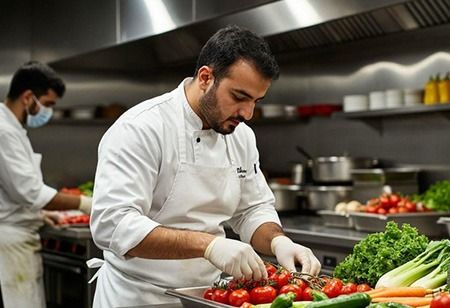
In wake of recent food safety drives conducted across Indian cities, food safety has emerged as a hospitality leadership imperative. As regulatory scrutiny and consumer expectations continue to rise, we spotlight the increasing importance of leadership accountability, food safety culture, transparency, technology, and continuous oversight. The article highlights hospitality, food and industry leaders’ perspectives on strengthening food safety across sourcing, preparation, storage, service, and organizational culture, while exploring how proactive leadership can build safer, more trusted, and resilient hospitality businesses.
Recently, Maharashtra FDA Commissioner Tukaram Mundhe’s rigorous food safety drives across Mumbai made headlines. His actions led to seizure of nearly Rs. 50 crore worth of adulterated food and dozens of restaurant licenses being suspended. In Bengaluru, Food Safety Commissioner K. Srinivas led Karnataka’s FSDA inspected 60 three-star and five-star hotels. The action involved The Lalit Ashok, Radisson Blu (The Atria), Taj Yeshwantpur, Four Seasons Hotel Bengaluru, Shangri-La Bengaluru and Vivanta Bengaluru Whitefield, while 77 samples were sent for laboratory testing.
The outcome: thousands of consumers lost trust in their favorite food spots and several established hospitality brands lost customer confidence built over years of hard-work.
For hospitality leaders, the message is clear: Food safety is no longer simply a kitchen issue; it is a leadership imperative that can shape customer trust, brand reputation and business resilience.
It is critical that food safety be embedded across sourcing, preparation, storage, service and organizational culture, rather than being treated as a responsibility confined to the kitchen. This shift requires leaders to move beyond compliance and make food safety an integral part of how their organizations operate.
Food Safety as a Hospitality Leadership Priority
Conversations in hospitality leadership often center on service excellence, customer experience, innovation, technology and business growth. However, a single food safety lapse can undermine years of brand building almost instantly.
This makes leadership accountability a top priority. Hospitality leaders must set clear expectations, allocate resources appropriately, monitor procedures and ensure that safety standards are consistently followed, even when there are no inspections. Ultimately, food safety should be driven by organizational culture and leadership commitment, not simply by the fear of regulatory action.
 Prathima Manohar, Founder of think-do- tank Urban Vision says, “India’s food landscape is changing dramatically. As consumers get accustomed to instant delivery, greater choice and convenience, expectations around what they eat are also rising. For hospitality, this makes trust an even more important differentiator. Food safety cannot remain a back-of-house compliance function; leaders have to make it part of the culture of the organization, because ultimately guests need to know that what they are being served is not just good and convenient, but consistently safe.”
The recent inspections demonstrate why this leadership shift is important. Food safety cannot depend solely on periodic inspections or corrective action after violations are discovered. It requires preventive thinking and continuous oversight.
 Amit Roy, Co-founder THINKTANC and Director, Shilton Hospitality, says, “Food safety definitely is becoming a leadership priority today because current health checks have made us realize that we have dropped the ball a long time ago and this is leading to health hazards. Hence, it's very vital that people get back, follow basic safety measures, follow hygiene, because there are lives at stake and it could blow up into a full-time crisis control which has to be done. It's better late than never, to have these systems in place now and be protective rather than to do a knee-jerk reaction which is not proactive.”
He adds, “it's just a wake-up call, because these practices have always been prevalent in the industry. It was just that they were not being monitored or not being followed properly.”
A policy can exist on paper, but leadership determines whether it becomes part of everyday operations. When leaders consistently prioritize hygiene, quality and accountability, those priorities are more likely to influence teams across the organization.
Also Read: 5 Exceptional Business Transformation Specialists
Building a Strong Food Safety Culture across Hospitality Organizations
Food safety culture goes beyond a checklist. It is reflected in the everyday decisions made by procurement teams, chefs, kitchen staff, service personnel, suppliers, managers and senior executives.
A strong culture begins with the understanding that every person involved in the food journey has a role to play. From selecting suppliers and checking raw materials to maintaining storage temperatures, ensuring sanitation and preventing cross-contamination, every stage can influence the final product served to a customer.
It is the responsibility of hospitality leaders to create an environment where employees understand not only what needs to be done, but why it matters. Training, communication and accountability are critical to building such an environment.
 Bhupendra Jha, CEO ICM & Nibble Food Services (an ICM group company) says, “Food safety must be a non-negotiable part of every hospitality business. As businesses scale, maintaining the same standards across sourcing, storage, preparation, and service becomes critical. We see food safety as a part of everyday operations, not something that comes into focus only during audits or inspections. It starts with reliable sourcing and continues through proper storage, hygiene, food handling and regular training of teams. The responsibility also lies with leaders to create a culture where these practices are followed consistently, even when no one is watching. A single lapse can affect consumer health, but it can also damage the trust a business has built over years. This is why food safety needs clear processes, trained teams and strong accountability at every level. In the hospitality business, quality is not just about how the food tastes; it is also about how safely it reaches the consumer. For us maintaining that trust is as important as delivering a good dining experience.”
Maintaining consistent standards across multiple outlets, locations, suppliers and teams requires systems that are clear, measurable and repeatable. Training is particularly important because hospitality operations depend heavily on people. Even the most advanced kitchen equipment or sophisticated monitoring system cannot compensate for poor practices if employees are not adequately trained or empowered to act.
A workplace where staff fear blame for raising concerns can allow minor issues to become larger failures. Conversely, when employees know that management values transparency, potential risks can be identified and addressed earlier.
This culture of openness is particularly relevant to food safety, where small lapses can have significant consequences.
Leadership Accountability & Food Safety Standards
Accountability is one of the strongest links between leadership and food safety. While individual employees are responsible for following procedures, senior management is responsible for creating the systems, resources and culture that make compliance possible.
Leadership accountability begins with asking the right questions. Are suppliers being evaluated properly? Are storage conditions being monitored? Are employees receiving regular training? Are corrective actions being documented and followed through? Are food safety concerns reaching decision-makers? Most importantly, are business targets being pursued without compromising safety?
 Sargam Dhawan Bhayana, Director, Planet Herbs Lifesciences, says, “For me it comes down to what's actually being handed over. Most of what we make is bought by somebody in a city for their parents back home. They're not there to check it. They trust that we did. Once you've sat with that, safety stops being a compliance function and becomes the thing the whole business rests on. If that goes, nothing else you've built matters much. I'm coming at this from manufacturing rather than hospitality, though the line is thinner than people assume. Part of our range is registered under FSSAI, so the regulator asking questions of a restaurant kitchen is the same one asking questions of us. Someone eating a meal you've served is extending exactly the same trust.”
Accountability begins at the top and leadership must own it beyond shallow talk. Sargam explains, “If the people at the top only ever ask about volumes and turnaround times, that's what the floor optimizes for. Nobody sets out to cut corners; they just take their cue from whatever gets asked about in the Monday meeting. Safety has to sit in that meeting too, or it quietly becomes somebody else's department.”
She further says, “The other half of it is what happens when somebody spots a problem. If raising it means you're the one who held up production, you'll only ever hear about the big failures, never the small ones, and the small ones are what you actually want to catch. Compliance is only the starting point anyway. People are buying your judgment more than your certificates. In our category one contamination story can cost you twenty years of work, and there's no marketing budget that fixes it afterwards.”
Customer trust is built through repeated interactions, but a single incident can quickly affect perceptions of an entire brand, particularly in an environment where consumers share experiences instantly through digital platforms and social media.
Accountability therefore needs to extend beyond the kitchen. Procurement teams need to evaluate suppliers carefully, operations teams need to maintain standards, human resources teams need to support training, and senior leadership needs to ensure that safety performance receives the same attention as financial and operational metrics.
Instead of waiting for inspections to reveal expired ingredients, inadequate storage or poor hygiene practices, businesses need internal systems capable of identifying and correcting vulnerabilities before they affect customers.
Also Read: 5 FTAs Strengthening India’s Growth Prospects in 2026 & Beyond
Balancing Customer Trust, Compliance & Operational Excellence
Hospitality businesses operate within a complex environment where customer expectations, regulatory requirements and commercial pressures intersect. Customers want food that is safe, fresh, high quality and delivered efficiently, while businesses must meet regulatory standards alongside managing costs, staffing, supply chains and operational demands.
The challenge is to ensure that efficiency does not come at the expense of safety.
Customer trust is one of the industry's most valuable assets. Guests may not see the processes taking place inside a kitchen, but they ultimately depend on the business to maintain those standards. This creates an implicit relationship of trust between hospitality providers and consumers.
Food safety should therefore be viewed as part of the customer experience rather than as something separate from it.
Leadership has to balance operational efficiency with the discipline required to maintain consistent safety standards. This includes ensuring adequate staffing, investing in training, selecting dependable suppliers and maintaining appropriate infrastructure.
For businesses operating across multiple locations, consistency becomes even more important. A brand promise is meaningful only when customers can expect similar standards at every outlet.
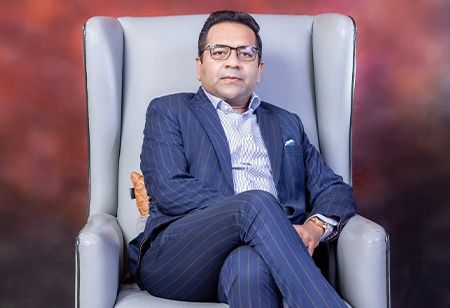 Aman Gupta, Managing Director of SSIEL (Shiv Shakti Interglobe Exports), says, “Having built our business around an integrated food value chain, we have come to recognize that food safety is ultimately a leadership responsibility. It cannot be limited to checks at the final stage of production; it has to be built into every decision, from sourcing and processing to packaging, storage and distribution. At SSIEL, our approach has been to maintain greater control and visibility across the value chain so that quality and safety are consistently monitored rather than addressed only when an issue arises.”
He adds, “For us, food safety goes beyond meeting regulatory requirements. It is about protecting the trust that consumers and global customers place in a food brand. That is why leadership must create a culture where quality, traceability and accountability are embedded into everyday operations. When these principles become part of the organization’s DNA, food safety becomes a foundation for sustainable growth and long-term consumer confidence.”
The integrated approach described here is increasingly relevant to hospitality, where the food journey often involves multiple suppliers and stages before reaching the customer. Traceability can help organizations understand where ingredients come from, identify potential risks and respond more effectively when issues arise.
At the same time, compliance should not be treated as the ceiling for food safety. Regulations establish essential standards, but responsible organizations need to develop practices that support continuous improvement.
The goal is not simply to pass an inspection. It is to create an operating environment in which safe practices are so deeply embedded that they become routine.
Technology, Training & Innovation in Food Safety Management
Technology is becoming an increasingly important enabler of food safety. Digital traceability, automated monitoring, data analytics and smart kitchen systems can provide hospitality organizations with greater visibility over their operations.
Technology can help monitor temperatures, track inventory, identify expiry dates, document cleaning schedules and maintain records. These tools can reduce dependence on manual processes while making it easier for leaders to identify gaps and respond quickly.
Digital traceability can also strengthen accountability across the supply chain. By maintaining records of ingredients and their movement through different stages, businesses can improve visibility and respond more effectively when a potential safety issue arises.
However, technology alone cannot create a food safety culture. It must work alongside trained people and responsible leadership.
The hospitality industry is therefore moving towards a combination of technology, training and human oversight. Data can indicate where a problem exists, but employees and managers must be equipped to interpret that information and take appropriate action.
Also Read: Niche to Mainstream: Mapping Pickleball’s Growth Story in India
The Future of Food Safety in Hospitality
Food safety is more than a regulatory requirement in hospitality—it is a foundation of trust, reputation and responsible business. By building a culture where hygiene and accountability are embraced across procurement, preparation, service and sanitation, and by leveraging technology, training and data-driven systems, hospitality organizations can strengthen consumer confidence while supporting operational excellence.
Ultimately, the future of hospitality will be shaped not only by the quality of the experience it delivers, but by how safely, responsibly and consistently that experience reaches every guest.