

The CEO Story: Ajay Ajmera's Journey from Textile Salesperson to Fashion Leader
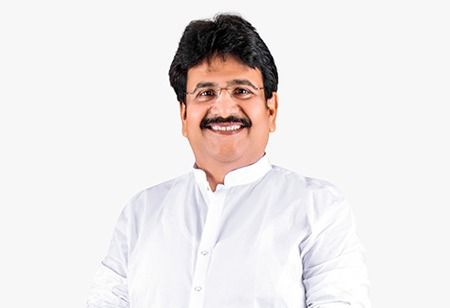
On a hot evening after a tiring day of work, 17-year-old Ajay sat at a tea stall – quietly contemplating his life choices.
Around him, Surat’s fast-moving textile ecosystem, the backbone of India’s fabric and garment industry, continued without pause.
But for Ajay, everything had slowed down. He thought:
“Did I make a mistake dropping out of class 12?”
“Should I have not moved to Surat, an unfamiliar city?”
“Should I simply move back home?”
It is in tough moments of self-doubt that true leaders are tested; and young Ajay showcased persistence and courage far ahead of his age.
As the next morning dawned, he returned to work and vowed to keep going even when nothing felt certain.
And so, he did.
34 years down the line, Ajay Ajmera today heads Ajmera Fashion, a Surat based textile manufacturer that supplies to 100000+ retailers, traders and wholesalers. Founded in 2011, the company has a production capacity of 10 lakh+ pieces per month and exports to over 30 countries.
The company however, was not built on scale, but on a vision.
During his two decades in Surat’s textile market, Ajay had closely observed how small retailers and aspiring entrepreneurs were denied access to products by manufacturers. In a bid to make the textile business more accessible for all, Ajay founded Ajmera Fashion in 2011.
Although his well-wishers and family were skeptical about his entrepreneurial aspirations, Ajay focused on his vision to create an integrated model that combined manufacturing, sourcing, distribution, and retailer support within a single framework.
Today Ajmera Fashion operates approximately 250 stores across India and Nepal. Having launched a franchise model through Ajmera Trends and Little Wings (a children’s clothing brand), the company’s goal is to expand its store network to over 400 outlets by March 2027.
In an in-depth conversation with CEO Insights India Magazine, Ajay takes us through his three-decade journey in the textile industry, highlighting key strategic decisions that shaped his growth journey.
Ajay talks about market adaptability, franchise-led growth, evolving industry dynamics, and leadership principles that have shaped a scalable and partner-driven fashion ecosystem.
This is Ajay Ajmera’s story: from textile sales person to heading 250+ store strong Ajmera Fashion.
When you look back at your early years in Surat, what personal doubts or setbacks did you encounter? What did those initial years teach you?
When I came to Surat in 1992 as a class 12 dropout, I was just 17, alone in an unfamiliar city, with no clear roadmap, only a strong belief that I had to make something of myself.
Being the youngest in the family, I had always been surrounded by love and support. Suddenly being away from that environment was more difficult than I had expected. In the early days, four to five of us shared a small room, adjusting with limited resources. There was a sense of bonding in that struggle, but the absence of family was something I felt deeply.
I eventually started working in a textile company at a salary of ₹1,200 per month. Every expense had to be planned carefully. While financial pressure was constant, what truly tested me was the emotional challenge. The loneliness and the quiet moments where self-doubt would creep in.
I still remember sitting at a tea stall one evening after a long day, questioning my decision and wondering if I should return home. But the next morning, I went back to work. Looking back,
Resilience was not built in big moments. It was built in those small decisions to keep going when nothing felt certain.
There were many doubts. About leaving my education. About surviving in a new city. About whether I was capable enough. But over time, I learned not to run away from these doubts, but to move forward despite them.
Those early years taught me patience, discipline, and consistency. Growth was slow, but it was steady. And when I eventually took the leap into entrepreneurship, I was not afraid of starting from zero, because I had already lived through it once.
Was there a defining moment or decision where you almost chose a different path? What ultimately convinced you to stay committed to building your own venture, Ajmera Fashion?
Yes, this decision came at a very crucial stage of my life.
After spending nearly 20 years in the textile industry, I had reached a stable position, earning around ₹2 lakh per month. Life was secure, and naturally, continuing on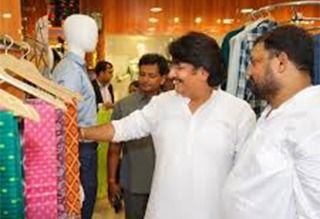 that path felt like the safer choice. In fact, most of my family members and well-wishers were not convinced about me leaving such stability to start something of my own.
But during those years, I had closely observed one thing that stayed with me. Many small retailers and aspiring entrepreneurs were regularly turned away by manufacturers. They were not given access to products, and in many cases, their dreams of starting a business ended before they even began.
That reality disturbed me.
In 2011, I decided to take the risk and founded Ajmera Fashion with a clear vision to make the textile business more inclusive and accessible. It was not an easy decision, but I believed that if I could solve this problem, it would create value far beyond just building a company.
What convinced me in the end was a simple thought. Stability can give you comfort, but purpose gives you direction.
Looking back, choosing purpose over comfort made all the difference.
What were the most pivotal strategic decisions that transformed Ajmera Fashion from a traditional textile business into a large national and international fashion network?
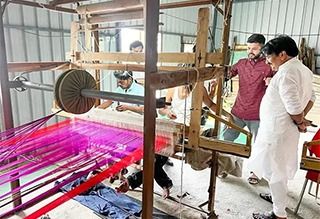 My journey in the textile industry began in the early 1990s as a salesperson in Surat’s textile markets, where I closely observed how the entire ecosystem functioned from manufacturers to retailers. Those early years gave me deep insights into the challenges retailers faced, especially inconsistent supply, lack of reliable product quality, and limited access to structured business support.
The decision to establish Ajmera Fashion Limited in 2011 came from the belief that textiles could be organized into a more reliable and scalable ecosystem. One of the most pivotal strategic moves was building an integrated model that combined manufacturing, sourcing, distribution, and retailer support within a single framework. This allowed us to create consistency in quality and delivery.
Another key decision was focusing on relationship-driven distribution rather than purely transactional trade. Instead of only selling products, we built long-term partnerships with retailers across India. Over time, digital adoption, stronger logistics systems, and global outreach helped us expand from a regional manufacturer into a national and international fashion network.
India’s fashion market is extremely diverse, with different regional preferences and price sensitivities. How have you built systems within Ajmera Fashion to decode these market signals and translate them into scalable product lines?
India’s fashion market is incredibly complex because every region has its own cultural aesthetics, price sensitivities, and seasonal buying patterns. To address this diversity, we developed systems that combine ground-level market feedback with structured product planning.
Retailer networks play a critical role in this process. Since our partners operate in different regions, they provide valuable real-time insights into consumer preferences. These insights help us adjust design themes, color palettes, fabric selections, and price points.
Additionally, we focus on scalable design frameworks creating collections that maintain a consistent brand identity while allowing variations suited to regional tastes. This balance between standardization and localization has enabled us to expand product lines efficiently while remaining relevant to diverse consumer segments.
With the launch of retail franchise model through Ajmera Trends, you’ve created opportunities for many first-time entrepreneurs. What gaps in the traditional textile supply chain inspired this model?
The launch of the franchise model through Ajmera Trends was inspired by a clear gap in India’s textile supply chain. Many aspiring entrepreneurs wanted to enter fashion retail but lacked structured supply, branding support, and operational guidance.
Traditional textile trade often depended on fragmented sourcing and inconsistent inventory. Through the franchise model, we aimed to simplify this process by creating a structured retail ecosystem.
Entrepreneurs receive access to curated product lines, supply chain reliability, and operational systems that reduce uncertainty in running a store.
Over time, this approach has enabled many first-time entrepreneurs especially from smaller towns-to participate in organized fashion retail. We believe this model will play an important role in decentralizing retail growth across India.
As the textile sector undergoes major changes due to fast fashion, digital commerce, and global competition, what capabilities must textile companies build to remain competitive in the future?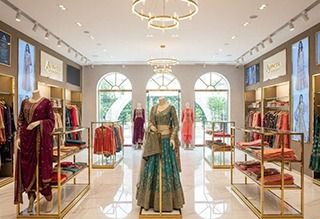
The textile sector is currently experiencing a structural transformation driven by fast fashion, digital commerce, and global competition. In the coming decade, companies will need to develop three core capabilities.
First, supply chain agility will be essential. Faster product cycles and responsive manufacturing systems will determine competitiveness. Second, digital integration from inventory management to retailer engagement will become central to business operations. Third, sustainability and compliance will increasingly influence global trade and brand credibility.
Companies that invest in technology, transparent processes, and innovation-driven product development will be best positioned to succeed in this evolving environment.
Having built everything from the ground up, how has your definition of success evolved over time?
In the early years, success for me was very simple. It was about survival. Earning enough to sustain myself, support my parents, and build some stability in a new city. At that stage, even small progress felt like a big achievement.
As I grew in my career, my definition of success shifted towards growth. It became about learning the business deeply, improving myself, and reaching a level where I could create financial security.
During this phase, one thing my father told me always stayed with me:
“Beta agar tum mochi bhi bano, toh aisa banna ki tumhare jaisa mochi shehar mein koi na ho!” (“Son, even if you become a cobbler, be such a good one that no one in the city can match you.”)
 That thought shaped my mindset. Whatever I do, I should strive to be the best at it.
But the real transformation in my definition of success came after I started Ajmera Fashion in 2011.
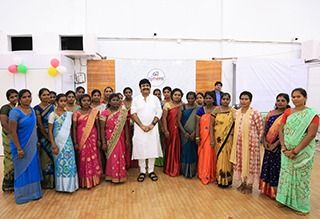
Success was no longer just about personal growth or financial milestones. It became about impact. When I saw small retailers starting their businesses, and women becoming financially independent from home, I realized that true success lies in enabling others to succeed.
Today, success for me is not measured only by numbers, but by how many lives we are able to touch and how many entrepreneurs we can empower.
From survival to growth to impact, this journey has taught me that real success is not what you achieve for yourself, but what you help others achieve through you.
Looking back at your journey, what leadership principles have helped you scale a business while simultaneously enabling thousands of partners to grow with you?
Throughout my journey, one principle has remained constant: business growth must be shared growth. Instead of building a business in isolation, we focused on building an ecosystem where retailers, entrepreneurs, and partners could grow alongside us.
Trust has been the most valuable asset. In the textile trade, relationships often matter as much as product quality. Consistency in commitments, financial discipline, and long-term thinking have helped us maintain that trust.
Leadership, in my view, is not only about scaling revenue but also about creating opportunities for others. When partners succeed and communities benefit from new economic activity, the business becomes stronger and more meaningful. That philosophy continues to guide the future direction of our organization.
Ajay Ajmera’s journey reflects a broader shift in India’s textile industry: from informal, relationship-driven trade to more structured, scalable business ecosystems. His experience highlights a key leadership reality in this transition: long-term growth in traditional industries increasingly depends on systems thinking, adaptability, and the ability to build trust at scale.