

What It Takes to Build Lasting Growth: A Long-Term Leadership Perspective
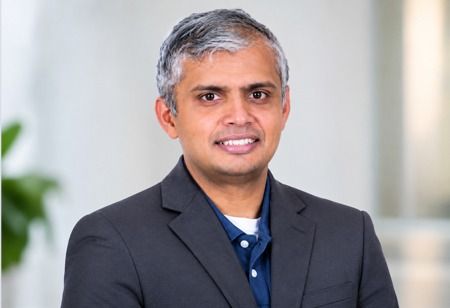 Growth in technology is often measured by scale, speed, and the ability to stay ahead of change. For Sree Balaji, Co-Founder and Group CEO of iLink Digital, it begins somewhere more fundamental: solving real problems and building value that lasts. That philosophy has shaped global tech consultancy iLink Digital’s journey for more than two decades, turning changing technology cycles into opportunities for sustained growth and reinvention.
As Co-Founder and Group CEO, Sree Balaji has guided iLink Digital from its entrepreneurial beginnings in 2002 into a global technology organization spanning AI, data, digital engineering, and proprietary technology solutions. His approach to growth extends beyond technology, with a strong focus on intrapreneurship, leadership development, sustainability, education, and community initiatives.
In an engaging interaction with CEO Insights India Magazine, Sree Balaji reflects on how this long-term philosophy has influenced iLink Digital’s evolution, from investing in emerging technologies and developing proprietary IP to creating an entrepreneurial culture within the organization. He also shares his perspective on leadership judgment, learning agility, and building capabilities that enable businesses to grow through constant change.
For deeper insights, read the full interview below.
Q1. Since 2002, you have scaled iLink from an entrepreneurial venture into a digital transformation firm; which leadership principle shaped that evolution?
A. The principle that has shaped iLink most is simple: play the long game and solve real problems. When we started in 2002, the technology landscape was very different, but the fundamental question remained the same: ‘what problem are we solving, and are we creating lasting value?’ That mindset helped us navigate multiple technology cycles and economic downturns without losing sight of the customer. It also shaped how we approached growth. We invested in capabilities, partnerships, and people even when the immediate payoff was not always obvious.
Today, as we move from digital transformation toward an AI-first model, the technologies have changed dramatically, but that principle has not. We still believe sustainable growth comes from staying relevant to real business problems and building the capabilities to solve them well.
Also Read: Making AI Matter: HFCL's Sunil Pandey on Smarter Enterprise Transformation
Q2. As that principle matured, how did navigating AI, data, and digital engineering reshape your definition of leadership beyond conventional services?
A. I am a firm believer that leadership is not about staying ahead of every technology; it is about understanding how technology can fundamentally change the way a business operates. As iLink evolved from digital engineering and transformation into AI, data, and intelligent solutions, my own focus evolved from asking, “Can we build this?” to asking, “Should we build this, and what outcome will it create?”
That shift requires a much deeper understanding of the customer’s business, its data, people, processes and constraints. It also means creating an organization where engineering talent, domain expertise, and business thinking come together. For me, leadership beyond conventional services is about building that capability at scale, while remaining willing to reinvent the organization as the nature of value creation changes.
Q3. With enterprises demanding measurable AI outcomes, how have you balanced building proprietary technology IP with solving customer problems across industries?
A. I don't see IP and customer problem solving as competing priorities. In fact, the strongest IP usually emerges from solving difficult customer problems repeatedly. The starting point is always the business challenge. If we see a pattern across customers or industries, we ask whether we can turn what we have learned into a reusable platform, accelerator, or product that creates value faster. That thinking is behind our growing portfolio of IP, including BEAK, AgileXL and iGentic, among others.
The objective is not to build technology simply because it is interesting. It is to reduce the distance between an enterprise's problem and a production-ready solution. [SREE INSIGHT: A specific example of an iLink IP evolving from a customer problem would make this answer particularly strong.] For us, IP is ultimately a mechanism for delivering better outcomes at greater speed and scale.
Q4. That balance requires choices; how do you decide which emerging technologies deserve long-term investment and which should remain experimental today?
A. I don't think every promising technology deserves a long-term bet. We look at the problem it solves, the maturity of the technology, the ecosystem around it, and whether we can build differentiated capabilities around it. More importantly, we ask whether it can create measurable value for an enterprise. That distinction is important in AI because there is no shortage of impressive demonstrations.
The harder question is whether something can operate reliably within real business workflows, with the necessary security, governance, data, and integration. That is why our focus has increasingly moved toward operationalizing AI rather than simply experimenting with it. We experiment broadly, but we invest deeply when we see a path from innovation to adoption, scale, and sustained business impact. Technology curiosity is valuable, but disciplined technology choices are what create businesses.
Q5. Your intrapreneurship philosophy suggests leaders can create entrepreneurs internally; how have you structured autonomy and accountability without diluting organizational direction?
A. I believe people become entrepreneurs when they are given ownership, not simply responsibility. At iLink, we try to create room for teams to identify problems, experiment with ideas, and build solutions, while keeping them accountable for the outcomes. Our AI transformation has reinforced this philosophy. Some of our most interesting ideas have emerged through hackathons, experimentation, and teams building solutions around actual business challenges rather than waiting for everything to come from the top.
At the same time, autonomy needs a clear direction. People should understand what the organization is trying to achieve and the standards around customers, security, quality, and ethics. My role as a leader is therefore not to control every decision. It is to provide direction, remove barriers, and create an environment where people feel empowered to make decisions and own the results.
Q6. As emerging leaders take ownership, what signals tell you they are ready to make consequential decisions rather than execute playbooks?
A. The clearest signal is not confidence; it is judgment. Someone may be very capable of executing a playbook but still hesitate when the situation falls outside it. I look for people who can distinguish between what they know, what they assume, and what they need to learn. They should be able to decide with incomplete information, explain the trade-offs, and take responsibility for the outcome, even when the decision doesn't work out.
I also look for whether they think beyond their own function or immediate objective. When people begin asking, “What is right for the organization and the customer?” rather than only “What is right for my team?”, they are usually ready for greater responsibility.
Also Read: 9 Business Leaders Whose Infidelity Scandals Shook Their Careers
Q7. Your work extends beyond technology into organic farming, education, investing, and community initiatives; how has this broader lens influenced decision-making?
A. Working across very different areas has taught me that the context changes, but the fundamentals of creating value do not. Whether you are building a technology business, investing in an idea, working in agriculture, or supporting education, you have to understand the problem deeply, think about the people affected by the decision, and consider the long-term consequences.
These experiences have also made me more comfortable with different time horizons. Technology often rewards speed, while agriculture or education can require patience before you see the outcome of an investment. That has influenced how I think about business as well. Not everything should be optimized for the next quarter. Some of the most important decisions are about building capabilities, relationships, and institutions that may create value years later.
Q8. Looking across technology, entrepreneurship, investment, and social initiatives, which leadership capability has become important for navigating complexity across unrelated sectors?
A. The capability I have found most valuable is learning agility. When you enter an unfamiliar domain, you cannot assume that what worked somewhere else will automatically work there. You have to listen first, understand the context, and identify which principles actually transfer.
My experiences across different sectors have also taught me that complexity often comes from the connections between problems rather than the problems themselves. In technology, for example, a powerful AI model is only one part of the equation. Data, people, processes, governance, and business priorities all influence the outcome. The same interconnected thinking applies elsewhere. I increasingly see leadership as the ability to connect seemingly unrelated ideas, learn quickly, and adapt without losing sight of the underlying purpose.
LAST WORD: Having built across industries, what leadership principles would you recommend young leaders develop to create value without chasing trends today?
I would encourage young leaders to build depth before chasing breadth, and conviction before chasing trends. Technology will continue to change, and many of today's most exciting ideas will evolve or disappear. What remains valuable is the ability to understand a real problem deeply, learn continuously, and create something useful. I would also encourage them to develop the discipline to play the long game. Building something meaningful rarely happens through one breakthrough moment. It comes from consistently learning, adapting, and staying focused when circumstances change.
Finally, don't measure your progress only by titles, visibility, or the number of technologies you know. Measure it by the quality of problems you can solve and the people you can enable around you.