

The Long-Term View: Shekhar Joshi on Smarter Business Leadership
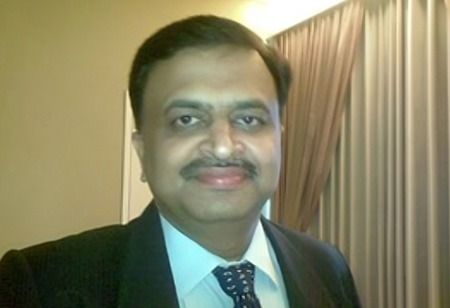 Sustainable business growth comes from bringing together financial understanding, customer insight, market awareness, and the ability to make decisions that creates long-term value. For Shekhar Joshi, Managing Director, Chugoku Paints (India), this broader perspective has shaped the way he approaches business, helping him balance customer needs, operational priorities, and sustainable growth throughout his career.
Shekhar’s career reflects this broad understanding of business. With more than 35 years of experience across finance, administration, operations, logistics, sales, and the marine and industrial coatings sector, he has developed a well-rounded approach to leadership. His exposure to different industries and business cultures has also shaped the way he looks at strategy, customer needs, innovation, and sustainable growth.
In an exclusive interaction with CEO Insights India Magazine, Shekhar shares insights from his 35 year-long leadership journey, discussing long-term value creation, strategic decision-making, customer-focused growth, sustainability, and the importance of human judgment in an evolving business environment.
For deeper insights, read the full interview below.
Q1. With nearly 35 years across India's evolving coatings industry, how has every business transformation redefined your understanding of leadership beyond financial performance?
A. My 35-year journey has taught me that leadership is all about growing and adapting. I started my career in finance. There, I mastered numbers, product costing, and how businesses run. While that gave me a strong analytical mind, the biggest change came when I shifted to Sales and Marketing for Marine and Industrial Coatings. I owe a lot of this growth to our Country Head- India/ my mentor, Mr. K.L. Batra, who guided me through this transition.
Mixing the discipline of finance with the energy of sales gave me a unique advantage. It prepared me to lead Chugoku Paints (India) – a wholly owned subsidiary company of Japanese MNC viz. Chugoku Marine Paints with a complete view of the business. Today, I don't just look at balance sheets. I focus on smart planning, thoughtful decision-making, and building strong teams. Every change in my career has shown me the same thing: numbers are just the starting point.
True leadership is about guiding people, handling change, and driving a global company toward a clear future
Q2. Beginning as a Finance Manager, when did you realize business strategy would ultimately matter more than financial discipline in leadership?
A. I learned this lesson very early in my career. When I worked in corporate finance, my job was to secure bank loans and long-term funding. I quickly realized that getting banks to trust you takes more than just keeping clean records. It requires a smart business strategy and the courage to take calculated risks.
My perspective grew even more when I worked with different global cultures. At Sigma Coatings, a Dutch MNC, I learned about structured budgeting and aggressive growth strategies. Later, at Chugoku Paints, a Japanese MNC, I experienced a more careful, deeply thought-out approach to business. Comparing these European and Japanese styles taught me a major lesson: finance is just one piece of the puzzle. Finance keeps the company stable, but strategy is the big picture that drives us forward. You need financial discipline to survive, but you need a great strategy to win.
Read More: Business Leadership: Shaping India's Global Future
Q3. How did moving from managing numbers to influencing large industrial decisions reshape the way you evaluated growth opportunities across diverse markets?
A. I firmly believe that every sales professional should understand finance, and every finance professional should understand sales. Having both skills changes how you see growth. Early in my career, the General Manager of a major shipping company—who later became the CMD of the state-owned enterprise asked Mr K L Batra – Country Head India a great question. He asked, 'Is Shekhar Joshi a sales person or a finance person?'
That question captured my entire approach to business. When I moved into sales, I did not just try to sell products. I used my finance background to look at the 'Life Cycle Cost' and the true cost-benefit ratio for our clients. Instead of just chasing a quick sale, I focused on finding the exact 'Best Fit' for the customer while protecting our profit margins. This created a true win-win situation. The customers saved money in the long run, and Chugoku Paints achieved sustainable growth.
Q4. Executing landmark infrastructure projects demands long-term thinking. How has balancing commercial ambition with execution discipline shaped your leadership philosophy?
A. A small seed does not turn into a large tree overnight. Business works the same way. To survive and grow, a leader must look far into the future. I have always believed that the early bird catches the worm, which is how we secured some of our most historic infrastructure projects. We won those deals by focusing on long-term value, showing customers the true cost-benefit ratio and life-cycle savings of our coatings.
Balancing your mind is vital when making big decisions. I like to think of it like playing a game of chess—you must think several moves ahead and look at every possible scenario. At Chugoku Paints, my leadership philosophy was shaped by a strict code of discipline:
- Never speak poorly of competitors.
- Never show desperation to close a deal.
- Listen deeply to understand the customer’s true problem.
- Provide the best solution only after studying every angle of their business.
Balancing commercial goals with this kind of execution discipline is what builds lasting trust and success
Q5. Introducing new coating concepts for critical infrastructure required challenging convention. How do leaders decide when industries are ready for meaningful change?
A. In our domestic market, there is a traditional preference for low-cost, short-term options. While that mindset might work for everyday purchases, it does not work for critical national infrastructure. Too often in our industry, companies get stuck in a price-driven mindset, automatically choosing the lowest bidder. Sales teams waste precious time trying to figure out how to be the least expensive option rather than the best option.
At Chugoku Paints, we rejected that approach. We are a product-centric company, meaning our goal is to build the highest quality products for the future, not just compete on price. Because of this, my focus was always on 'concept selling'—teaching the market to look beyond the initial cost. Leaders know an industry is ready for change when traditional, low-cost methods can no longer protect modern infrastructure. By aligning with our world-class R&D, I was able to challenge standard practices and deliver advanced solutions that truly protected our clients' long-term investments.
Q6. Leading marine, protective, and industrial businesses exposes leaders to different customer realities. How has this diversity strengthened your strategic decision-making?
A. Across marine, protective, and industrial coatings, the core goal is always the same: protecting assets for as long as possible to keep maintenance costs low. However, the customers in each sector have completely different realities and expectations.
In the marine sector, I dealt with marine engineers and sea captains. They are deep technical experts who look closely at product performance. In contrast, protective and industrial clients are often procurement and contract managers. These teams are focused on corporate targets, timelines, and budgets.
My time working with the Indian Railways was a fantastic example of handling this diversity. I worked directly with the Chief Administrative Officer’s team. These were brilliant civil engineers, many from top institutes like the IITs, managing massive projects from start to finish. Collaborating with such highly qualified minds taught me a great deal. Navigating these different worlds strengthened my decision-making. It taught me that as a leader, you cannot use a one-size-fits-all approach. You must tailor your strategy to match the exact professional reality of the client sitting across from you.
Also Read: Charting New Horizons In Maritime Engineering And Defence Innovation
Q7. As sustainability became a business priority, how did carbon reduction evolve from regulatory compliance into a long-term competitive leadership strategy?
A. In the marine sector, carbon reduction is driven by strict global regulations. Shipowners must follow International Maritime Organization rules to operate. Advanced coatings reduce friction in the water, which lowers fuel consumption and cuts emissions. In that space, sustainability is a clear requirement.
However, in the general industrial sector, the approach is often different. Many companies still treat corrosion control as a minor maintenance cost rather than a green strategy. I recently visited a major global manufacturing facility and observed severe structural corrosion. It was a clear reminder that many corporate boards do not see the big picture.
When structures rust away, companies are forced to replace massive steel parts. Manufacturing new steel requires a huge amount of energy and creates a large carbon footprint. We live in a fragile environment, and protecting our existing infrastructure from decay is one of the most effective ways to lower emissions. True strategic leaders look beyond simple rules. They realize that investing in long-lasting asset protection is a powerful way to reduce carbon and protect the planet
Q8. Looking back, which leadership decisions created stronger business value than immediate financial success, and what shaped those choices over time?
A. Coming from a financial background, I have always believed that building long-term value matters much more than chasing quick profits. This principle has guided my entire life and career.
Looking back, three specific leadership decisions stand out as the ones that created the greatest value for our company. Two were in the marine sector, and one was in industrial coatings. In all three cases, the choice came down to one core idea: 'Life-Cycle Cost Performance.'
Many businesses make the mistake of only looking at the initial price of a product. Instead, I focused on showing clients how our coatings perform over time. If a coating protects an asset for twice as long, the owner gets a fantastic return on investment and the value of their property goes up. Making decisions based on long-term endurance rather than a low upfront price is what builds true, lasting business value. It creates a win-win for both the asset owner and the provider.
LAST WORD: For young leaders building long careers across evolving industries, what thinking has consistently helped you make better leadership decisions through changing business landscapes?
Change is the only constant in business. To survive and grow in fast-evolving markets, leaders must balance short-term goals with long-term vision. Without this balance, businesses stagnate.
I also want to share a crucial piece of advice with the younger generation regarding Artificial Intelligence. While AI is a powerful tool, relying on it too much in the long run is a mistake. I personally choose not to use AI to write my messages or answer my emails. AI is excellent for gathering leads and analysing data, but you must know where to limit its use.
Real leadership requires your own personal inputs. Your decisions should be shaped by what you have seen, what you have felt, and what your own mind tells you. AI lacks human emotions, observation, and intuition. Besides, if I let an AI write all my emails, my team would instantly know something was wrong. The emails would sound way too perfect, and they would miss my usual typos and personal jokes! In business, your feelings and empathy play a vital role in building relationships and making big choices. A machine can process numbers, but only a human leader can truly inspire people and guide them through change.