

From Fiber to Future-Ready Networks: Insights from Telecom Leadership
 India’s digital infrastructure is entering a new phase, driven by rising connectivity needs, network expansion, and rapid technological change. Building resilient infrastructure businesses in this environment calls for strategic foresight, operational discipline, and leadership that can translate ambitious vision into scalable execution.
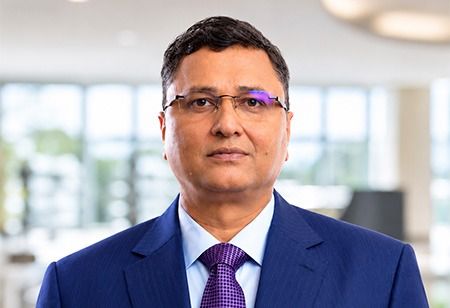
With over 28 years of experience in telecommunications, Ashish D. Jain, CEO, Polycab Telecom, has played a pivotal role in shaping the company’s optical fiber and telecom business. In an exclusive interaction with CEO Insights India Magazine, he shares his perspectives on leadership evolution, business building, cross-functional collaboration, operational excellence, and future-ready connectivity.
Drawing from his experience across manufacturing, telecom, and EPC initiatives, Jain discusses the leadership principles that have guided Polycab Telecom’s growth, the importance of empowering teams, and the need to balance technical expertise with changing customer and market demands.
Read the full interview below to explore his insights on building high-performing teams, navigating digital infrastructure opportunities, and creating lasting organizational value.
Q1. With over three decades in telecommunications, how has your understanding of leadership evolved as you progressed from engineering and operations to leading a digital infrastructure business?
A. Over 30 years in telecommunications have taught me that true leadership is a continuous evolution one rooted in building strong relationships, staying curious, making sense of market dynamics and empowering teams through modern technology.
My early career in engineering and operations grounded me in technical rigor, operational precision and execution. However, stepping into the driver’s seat of a digital infrastructure business shifted my perspective. I learned that leading a high-growth enterprise isn't just about managing processes; it’s about driving meaningful disruption and inspiring people to believe in that transformation.
Today, leadership means harmonizing technology, customer success, people development, commercial impact and long-term vision to deliver progress that creates lasting value for the larger ecosystem.
Q2. Having built Polycab Telecom's optical fiber business from the ground up, how did taking ownership of a vision before its success reshape your leadership philosophy?
A. Taking ownership of a bold vision long before its success proved that clarity, resilience and adaptability are the true engines of leadership. Building Polycab Telecom’s optical fiber business from the ground up reinforced that while strategy opens doors, relentless consistency and empowering the right team turn ambitious goals into reality.
Embracing early uncertainty taught me to focus on long-term impact over immediate outcomes-a philosophy cantered on leading with unwavering conviction, staying versatile through growth and trusting that thorough preparation always clears the path forward.
Also Read : How Modern Leadership Has Evolved from Operations to Agentic AI
Q3. Your career began with manufacturing and project-execution. How did you transition from personally driving operational excellence to empowering teams to achieve it independently?
A. In my early career in manufacturing and project execution, success meant personally driving every operational detail on the shop floor. As my role evolved, I realized that true leadership isn't about managing operations yourself, but about shaping the environment where others can excel.
Today, I focus on injecting ambition, purpose, and a sense of a shared journey into my teams while building a talent pipeline that consistently delivers strong business outcomes. By backing my team with clear expectations, robust processes, and complete autonomy, I empower them to bring their innovative ideas to life and take ownership of their decisions. Witnessing their collective achievements and grooming the next generation of leaders to make a lasting impact on our organization is what truly drives me every day.
Q4. While leading the greenfield development of an optical fiber manufacturing facility, how did you establish a culture of clarity, agility and accountability before systems and processes were fully in place?
A. Leading the greenfield setup of an optical fiber facility meant establishing a strong culture well before formal systems were locked in. The focus was on grounding the team in a clear big-picture goal while simplifying expectations around individual ownership and strict quality and safety standards. Stripping away functional silos across engineering, manufacturing, procurement, and project management kept communication open and decision-making quick. That early agility—spotting friction points fast and adapting on the fly—built the collaborative mindset needed to drive execution long before every SOP was fully written.
Also Read: Enabling The Next Wave Of Telecom Disruption In India
Q5. As your responsibilities expanded from operations to enterprise leadership, how did you learn to balance technical expertise with long-term business strategy and customer expectations?
A. Moving into enterprise leadership meant shifting the primary focus from daily operations to driving long-term outcomes and strategic value. This transition allowed for a deeper evaluation of market shifts such as, India's expanding digital infrastructure and network densification to ensure technical capabilities align directly with commercial sustainability. Rather than getting caught up in granular execution, technical expertise became a tool to guide decentralized, multi-functional teams through technical churn, ensuring complex projects remain reliable, scalable, and customer-focused. Ultimately, balancing deep technical know-how with executive strategy comes down to aligning capability-building with evolving customer expectations and long-term growth.
Q6. Leading large-scale manufacturing, EPC and digital infrastructure initiatives require seamless collaboration. How do you build accountability while empowering cross-functional leaders to make confident decisions?
A. Leadership at this scale works best through inspiration and trust rather than top-down control. By setting up clear milestones, robust review frameworks and a solid operational structure, you give cross-functional teams the freedom to act independently without waiting on endless approvals.
Structuring the organization to be decentralized yet interdependent allows leaders to take true ownership, making confident decisions within a defined boundary while staying fully accountable for their outcomes.
When delegation and multi-layered collaboration come together like this, high performance naturally follows.
Q7. India's digital infrastructure landscape is evolving rapidly. As a CEO, how do you align diverse teams around a shared vision while adapting to changing technologies and market opportunities?
A. We have aligned every function around a single vision—to be a leading partner in India’s digital journey. By establishing clear accountability and interdependencies, we empower our teams with the trust and flexibility they need to respond rapidly to evolving technologies, stay close to customer needs, and capture emerging market opportunities together."
Q8. Many professionals in engineering and telecom aspire to leadership roles. Beyond technical expertise, what capabilities have you found to be most critical for building long-term leadership success?
A. Leadership is fundamentally about people no matter how advanced the technology or strategy, true organizational growth happens when you empower your team to take ownership. Long-term success relies on articulating a clear vision while cultivating deep self-awareness to make high-stakes decisions when setting the future course.
It demands agility and strategic adaptability as market dynamics and customer expectations constantly evolve, but most importantly, it requires identifying and nurturing a strong talent base. Seeing team members step up, prepare for greater responsibilities and deliver measurable outcomes is easily the most rewarding part of leading; ultimately, technology sets the stage, but empowering people drives the legacy.
LAST WORD: As a leader driving Polycab Telecom's vision for future-ready connectivity, how do you define the lasting impact of your leadership beyond business-growth and organizational milestones?
At the end of the day, true leadership isn't just about achieving targets, it’s about building something that thrives long after you step back. My legacy will be the capabilities we’ve built and a culture rooted in deep ownership and innovation. When you develop strong, future-ready leaders who can tackle whatever the market throws at them next, the business naturally keeps growing. That continuous, self-sustaining momentum is the lasting impact I want to leave behind.