

Indofast Energy, GLIDA to Set Up 100+ Battery Swapping Stations
Indofast Energy, a provider of battery-swapping solutions, announced a collaboration with GLIDA, a firm specializing in EV charging infrastructure services, to establish battery swapping stations at GLIDA's charging locations throughout India.
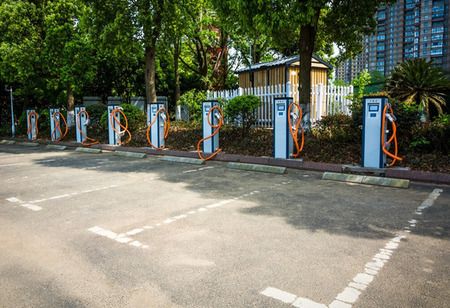
Through this partnership, Indofast Energy's battery-swapping stations will be situated alongside current and future GLIDA EV charging locations, resulting in combined EV energy hubs that provide both regular plug-in charging and fast battery swapping options.
Also Read: Emami Agrotech Enters Snacking Market, Invests Rs.750 Crore
The firms intend to establish 50 sites featuring more than 100 battery-swapping stations, starting with 10 Quick Interchange Stations (QIS) in Bengaluru, Chennai, and Hyderabad.
The collaboration enables Indofast Energy to utilize GLIDA's current charging sites rather than creating each swapping location separately, which could speed up network expansion in high-demand urban areas.
This is expected to establish unified EV energy hubs by consolidating charging and swapping infrastructure, enabling users from various vehicle types to obtain complete energy solutions at one prominent location, it stated.
According to the company, this partnership provides delivery riders and fleet operators with fast battery swapping at convenient, well-known locations, thus enhancing their daily operational uptime on the road.
Also Read: Ola Electric Pivots to Dealer-led Retail After Five Years
GLIDA's nationwide presence offers Indofast Energy accessible locations that expedite the expansion of its Battery-as-a-Service (BaaS) network into high-traffic markets, establishing an integrated energy hub that effectively caters to various EV sectors, the company states.
GLIDA, previously called Fortum Charge & Drive India, has been managing EV charging infrastructure in India since 2017. Indofast Energy's established charging network and expertise in managing public EV charging stations provide access to locations that already draw electric vehicle users.
From an infrastructure standpoint, co-location can also alleviate certain difficulties linked to obtaining new locations and building entirely separate facilities. Rather than viewing charging and battery swapping as rival options, the collaboration strategically presents them as complementary technologies catering to various vehicle types and usage habits.
Also Read: Cuticura Eyes Pan-India Growth and Younger Consumers
India's EV infrastructure is evolving from standalone charging stations to diverse energy hubs. Quick charging is essential for electric vehicles, whereas battery replacement is perfect for high-mileage motorcycles and scooters to reduce inactivity. As Indofast expands and charging operators incorporate swapping infrastructure, charging and swapping could evolve into complementary elements of India's EV ecosystem.