

Tata Motors Overhauls Technology Strategy for its Avinya EVs
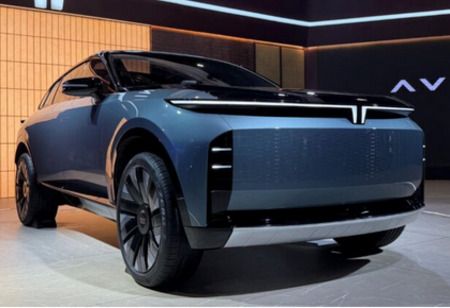
Tata Motors has revamped its technology approach for the Avinya premium electric vehicle initiative, substituting the initially intended JLR Electrified Modular Architecture (EMA) with a platform obtained from the Chery-JLR (CJLR) network.
The initiative is anticipated to assist Tata Motors in reducing development durations, enhancing cost effectiveness, and accelerating the launch of its premium EV initiatives.
The initial production model according to the updated roadmap will be the Avinya X, internally referred to as the P2 program. Engineering prototypes are anticipated later this year, aiming for a market release in 2027.
The change also alters the initial product order, as the earlier P1 program seems to have taken a lower priority while Tata Motors directs its attention to producing the Avinya X.
Although the fundamental mechanical structure will originate from the CJLR ecosystem, Tata Motors is modifying essential components of the electronics, software, and vehicle systems to meet the demands of the Indian market. Tata Technologies' engineering teams in China are reportedly engaged in modifying the architecture in collaboration with teams in India and the UK. The decision arises as manufacturers worldwide are more frequently engaging with China's electric vehicle ecosystem, which currently dominates the sector in batteries, software integration, supply-chain efficiency, and development pace.
Also Read: TCS Partners With Mistral to Build Frontier-Grade AI Solutions
Tata Motors gains access to the CJLR platform, which offers a reliable EV architecture, enabling the company to concentrate its resources on localisation, software, connectivity, and enhancing customer experience.
Industry reports suggested that the initial Avinya models will probably include battery packs within the 65-80 kWh spectrum, striking a balance between range, weight, and cost. Although Tata Group's battery initiative Agratas is key to the company's future strategies, early vehicles might depend on current battery ecosystem partners until Agratas achieves full capacity. Industry executives stated that strategies for battery sourcing, pack integration, and localization are continually refined as the program advances.
Also Read: Havas Media India Bags Media Mandate for Matrimony.com
The Avinya initiative is also becoming a notable result of the enhanced partnership between Tata Motors and JLR. In the last two years, the two firms have broadened collaboration in engineering, sourcing, electrification, and software development. Industry leaders view Balaje Rajan's recent transition to a more significant position in the UK, as initially reported by Autocar Professional, as part of a wider strategy to enhance cohesion among upcoming vehicle programs and technological projects.
In addition to Avinya X, Tata Motors is considering a bigger three-row luxury electric SUV within the Avinya lineup.
The vehicle is anticipated to adhere to the initial model and assist in positioning Avinya as an independent premium EV brand instead of merely a one-product initiative. Industry insiders indicated that the Chennai-Ranipet ecosystem is anticipated to significantly contribute to production. The manufacturing plant, currently functioning with an annual capacity of approximately 30,000 units, is expected to aid initial production efforts before localization expands.
Also Read: TechnoStruct Group Conducts 4D and 5D BIM Workshop for AIPL
The facility may ultimately take on increased importance. JLR is anticipated to utilize the wider architecture family for upcoming global products, opening up avenues for collective sourcing, production, and supplier investments for both companies. Executives in the industry highlighted another possible benefit. Chery is anticipated to provide frameworks to various international partners, including its proposal.