

Shaping the Future of Work Through People-Centric Leadership
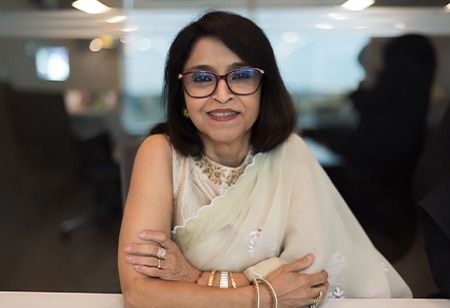
The workplace is undergoing a profound transformation as organizations adapt to rapid technological advancements, changing employee expectations, evolving skill requirements, and new models of work. The growing influence of AI is further reshaping talent acquisition, employee development, leadership, and workplace culture. As businesses move toward more agile and skills-driven workforces, continuous learning, adaptability, and employee engagement are becoming critical to long-term growth.
In conversation with CEO Insights, Achal Khanna, CEO – SHRM India, APAC & MENA, shares her perspectives on these evolving workplace trends and the leadership priorities shaping the future of work.
Achal brings over three decades of leadership experience across diverse industries. She leads SHRM’s regional growth, strategic partnerships, and engagement with governments and business associations. A strong advocate for inclusive workplaces, women’s empowerment, and leadership development, she has held senior roles at Kelly, GE, Polaroid, DuPont, and ITC.
Q1. After more than three decades across diverse industries and leadership roles, what fundamental leadership qualities have remained critical despite the changing business landscape?
A. I started in the early nineties, long before performance dashboards or engagement surveys existed, and what got leaders through a rough quarter back then wasn't a framework. It was whether people actually believed what they said in the room. That part hasn't moved. What's different now is speed and visibility. A decision made on a Tuesday can end up picked apart on an employee review site by Thursday, so the old habit of softening a message on the floor after saying something firmer to the board simply doesn't survive anymore.
The leaders I've watched hold up across three decades mostly share one thing. They say roughly the same thing no matter who's listening. It's not glamorous advice, and it needs no new technology to pull off. It just takes more discipline than most people expect, since it's genuinely harder to sustain today than it was thirty years ago.
Q2. As organizations navigate rapid technological and workforce changes, how should leaders balance business performance with employee expectations, engagement, and well-being?
A. I've stopped thinking of this as a trade-off, because the numbers don't actually support treating it as one. Organisations posting the strongest revenue and productivity numbers this year are also the ones scoring well on engagement surveys, not despite the attention paid to wellbeing but often because of it. The mistake I keep seeing is wellbeing getting run as a separate initiative sitting next to the real work, owned by HR, while everyone else stays focused purely on delivery targets.
It works better folded directly into how work gets assigned and measured. Realistic workloads matter more than another wellness webinar. So does a manager who actually checks in, and recognition that isn't just a line on an annual survey. Employees can tell the difference between a wellness program and a workplace that's genuinely sustainable to work in, and increasingly they're choosing employers based on which one they're getting.
Also Read: What Gen Z Wants at Work and How to Build Teams That Deliver in the AI Era
Q3. What are the biggest shifts you are seeing in how organisations attract, develop, and retain talent, and what do these changes mean for traditional talent strategies?
A. Skills-based hiring has moved from a pilot program to mainstream practice this year, with a clear majority of employers now using it for entry-level roles compared to roughly two-thirds a year ago. That's forcing recruitment teams to build entirely new evaluation methods since a degree or a previous title tells you far less than it used to.
Retention is shifting too; internal mobility now matters more than external hiring in a lot of organisations I talk to, partly because replacing someone costs more than redeploying them. The traditional strategy of hiring for pedigree and retaining through pay alone is fading. What's replacing it is messier. Skills verification matters more than it used to, internal marketplaces are becoming normal, and career paths increasingly look like a lattice rather than a ladder.
Q4. With skills and job roles evolving rapidly, how can organisations build a workforce that is adaptable and prepared for continuous change?
A. The uncomfortable fact is that skills now have a shelf life of roughly five years on average, and for narrow technical skills tied to a specific tool, that window can shrink to two or three. Building for that reality means treating learning as continuous infrastructure rather than an annual training calendar event.
The organisations doing this well give people time inside working hours to build new skills, not just access to a course library nobody opens. They also reward internal movement rather than quietly penalising it, since an employee who shifts function to stay relevant is doing exactly what the organisation needs, even if it looks like attrition risk on a spreadsheet. Adaptability has to be built into how work and careers are structured, not bolted on as a side programme.
Also Read: Redefining Leadership through Empathy, Agility & Purpose
Q5. Employee expectations around flexibility, purpose, career growth, and workplace culture have changed significantly. How should organisations rethink their employee value proposition in response?
A. The old employee value proposition was largely transactional. Pay, stability, a title, done. That still matters, but survey after survey this year shows flexibility and a sense of purpose now sitting close to pay in how people rank what keeps them at a job, which would have sounded strange to say out loud a decade ago. What I hear consistently now is people wanting to understand how their role connects to something larger, and having real say over where and how they work. They also want to see a visible path forward rather than a vague promise of one.
Organizations rethinking their proposition well are getting specific instead of aspirational. They name actual skill pathways. They're honest about flexibility limits instead of overpromising. Managers talk about purpose in plain language rather than leaning on a mission statement nobody remembers. A proposition that sounds identical across ten competitors isn't really a proposition anymore.
Also Read: How CHROs Can Build an AI-Ready Workforce
Q6. As technology, including AI, becomes increasingly embedded in the workplace, what should leaders do to ensure that innovation remains centred on people rather than technology alone?
A. There's a real trust gap worth naming here. Leadership tends to view AI adoption far more positively than employees do, sometimes by twenty points or more in the same survey, and that gap shapes behaviour quietly: people either hide their AI use or avoid it altogether rather than raise concerns openly. Closing that gap starts with explaining decisions rather than just announcing tools, and involving the people who'll actually use a system before it goes live rather than after.
Managers carry outsized influence here; teams with managers who genuinely support AI adoption show meaningfully higher engagement than the average. Technology centred on people means the rollout plan includes the humans affected by it from day one, not as an afterthought once the tool is already live.
Q7. India is becoming an increasingly important global talent and capability hub. What should organisations and leaders do to strengthen India's workforce competitiveness over the next decade?
The scale here is genuinely striking. India now hosts over two thousand global capability centres employing more than two point three million people, generating close to ninety eight billion dollars in revenue this year alone, and that workforce has grown by nearly half a million people in just two years. India already accounts for close to half the world's GCC talent base.
Sustaining that lead means moving well beyond cost arbitrage, which was the original pitch two decades ago. It requires deeper investment in continuous upskilling. It also requires genuine decision-making authority sitting with India-based leaders instead of being routed elsewhere, and real infrastructure investment in tier two cities so growth doesn't stay stuck in three or four metros indefinitely.
LAST WORD: Looking toward 2030, what major shifts in leadership, workplace culture, and talent management do you believe business leaders should start preparing for today?
By 2030, I expect the line between technical skill and human skill to blur further than it already has. Judgment and communication will matter as much as any specific tool proficiency, and adaptability probably matters more than either, mainly because tools are already changing faster than any curriculum can track, and that gap will only widen. Leadership will need to get more comfortable with decisions made closer to the work rather than routed up a chain, since centralised command doesn't scale well against this pace.
Talent management will look far less like the once-a-year cycle most companies still run today, and much more like continuous, real-time recalibration of who's doing what and why. Leaders who start building that muscle now, rather than waiting for the calendar to say 2030, are the ones whose organisations will still feel steady when the next disruption shows up early, and it usually does. In short, the message is clear: start preparing now.