

India's Semiconductor Ambitions: Policy Push to Global Manufacturing Hub
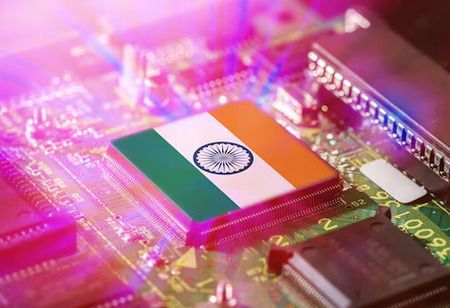
India is advancing its semiconductor ambitions through policy initiatives, manufacturing investments, indigenous chip design, and global partnerships. Industry leaders at the Bengaluru Tech Summit 2026 discussed the opportunities and challenges in building a competitive, end-to-end semiconductor ecosystem.
The global semiconductor industry is undergoing a major transformation as geopolitical tensions, technological competition, and growing concerns over supply chain security reshape the electronics manufacturing landscape. Once driven largely by cost efficiency and specialized production networks, semiconductor manufacturing has increasingly become a strategic priority for countries seeking greater technological independence and economic resilience. As nations look to strengthen their domestic capabilities and diversify supply chains, India is emerging as a promising destination in the evolving global semiconductor ecosystem.
At the Bengaluru Tech Summit 2026, industry leaders and policymakers explored how these global developments are influencing India's semiconductor ambitions. Discussions across sessions on geopolitics, electronics system design and manufacturing (ESDM), and semiconductor manufacturing highlighted the country's progress in establishing manufacturing capabilities, the importance of building a comprehensive domestic ecosystem, and the challenges that remain in its pursuit of global competitiveness.
Why Geopolitics is Reshaping Semiconductor Manufacturing
The changing dynamics of the global semiconductor industry are closely linked to the growing intersection of technology, economics and geopolitics. Explaining this shift, Alejandro Sinekoff, Vice President and Global Head of Strategic Alliances, Partnerships, and Marketing Communications, L&T Semiconductor Technologies noted that semiconductor manufacturing has evolved into a strategic asset for nations, moving beyond its traditional focus on technological specialization and cost efficiency.
As he noted, "Manufacturing has become a strategic asset for the nations. That was not the case before."
He further explained that the industry is witnessing a shift in priorities, with countries increasingly focusing on securing reliable access to critical technologies and strengthening supply chain resilience.
"We have moved from a vision based on technology and cost efficiency into a new world dynamic. That world dynamic is based on trust, and you could call it resilience," he said.
Also Read: Tata Electronics, L&T Semiconductor Join Hands to Make Chips in India
Against this backdrop, India has an opportunity to position itself as a trusted partner in the global semiconductor supply chain. According to Sinekoff, the country's geopolitical position gives it an advantage as nations look to diversify their manufacturing networks and reduce their dependence on concentrated supply chains. However, he emphasized that establishing manufacturing facilities alone would not be sufficient to build a competitive industry. India must also strengthen its semiconductor design capabilities, develop indigenous intellectual property (IP), and build a robust supporting ecosystem to sustain manufacturing operations.
Strengthening India's Semiconductor Policy Framework
Highlighting the progress made under the India Semiconductor Mission (ISM) 1.0, Prof. V. Kamakoti, Director, IIT Madras noted that initiatives such as the Design Linked Incentive (DLI) and Production Linked Incentive (PLI) schemes have encouraged more companies to enter India's semiconductor sector. These measures have helped expand participation in the industry and support the development of domestic capabilities.
However, access to intellectual property (IP) remains a major challenge, particularly for Indian startups. Kamakoti pointed out that while India has a strong pool of semiconductor design talent, many professionals work for multinational companies, where the IP developed belongs to the respective organizations rather than being retained within the country. This creates a gap for startups seeking to develop their own semiconductor products.
To address this challenge, ISM 2.0 is looking at creating a shared platform that would make semiconductor IP accessible to companies participating in the DLI program. The platform would also help identify the specific IP requirements of companies, giving policymakers a clearer understanding of the industry's needs.
As Kamakoti explained, "all IPs should be on one platform. People who want to avail those IPs through the DLI come to that platform, so we are maintaining that platform."
"The fab equipment, IPs, and compound semiconductors are the three things which we are concentrating on in ISM 2.0, along with the materials."
Through this approach, the mission aims to improve access to essential design resources and encourage greater participation in India's semiconductor ecosystem.
India's Semiconductor Push: From Policy to Manufacturing Progress
Jitendra Chaddah, Sr Executive & Strategic Advisor: xMD/ VP /COO of Semicon enterprises explained that semiconductor policies generally serve three broad objectives: reducing import dependence, building foundational capabilities in areas where a country lacks expertise, and gaining geopolitical leverage. Looking at India's approach, he noted that since the launch of ISM 1.0 in December 2021, the government has introduced policies covering different segments of the semiconductor value chain, including design, display fabs, semiconductor fabrication, and assembly. He observed that India is currently prioritizing the development of basic capabilities while also working towards reducing its reliance on imported components.
As he explained, "any semiconductor policy of any country can broadly have three kinds of goals. One would be to reduce import dependence; the second would be to build some base-level capability in a domain which you don't have; and third would be to gain some geopolitical leverage."
Highlighting the progress in domestic manufacturing, Chaddah pointed out that India has begun establishing the infrastructure required to participate in the global semiconductor industry. According to him, nine assembly plants were under construction, four of which had started some form of commercial production, alongside one semiconductor fab and a couple of compound semiconductor fabs under development.
Describing this progress, he compared India's semiconductor journey to entering a stadium without previously having a playing field, stating, “now we're finally in that stadium, started playing the game”.
However, Chaddah believes that India still needs to strengthen its position in areas that could provide greater strategic and geopolitical leverage. He highlighted the potential of open-source semiconductor IP, process design kits (PDKs), and electronic design automation (EDA) tools, particularly for applications such as analog chips. Compound semiconductors for advanced defense applications, including AESA radars, also present opportunities.
He further noted that while ISM 2.0 has introduced new mechanisms to encourage collaboration between foreign companies and Indian startups, India needs to place greater emphasis on developing high-end chip products and design capabilities. He stressed that the country should focus on encouraging semiconductor innovation and building products in India rather than becoming overly concerned about where startups raise their funding.
Developing Indigenous Innovation and Semiconductor Design
Chaddah highlighted the importance of open-source IP, process design kits (PDKs), and electronic design automation (EDA) tools in strengthening India's semiconductor autonomy. He noted that these technologies could provide strategic advantages, particularly in analog chip development.
As he explained, “one, itself, open source—the ecosystem is still a big thing. There is still a lot of—that is one way to gain geopolitical leverage or autonomy”.
He also noted that ISM 2.0 encourages foreign companies to collaborate with Indian startups through new incentives, including government equity participation and royalty-based payouts.
However, he stressed the need for stronger investment support and greater focus on high-end chip design, stating, “The investment ecosystem in India is still building up; we don't have too many investors who will back semiconductor firms. So at this stage, I would say we should just focus on creating products at the high end, doing design—that I don't see yet”.
Also Read: PM Modi Chairs Roundtable With Global Semiconductor CEOs
India's Growing Semiconductor Manufacturing Ecosystem
India's semiconductor manufacturing ecosystem is gaining momentum, supported by policy initiatives, rising investments, and growing participation from domestic and international companies.
Highlighting this progress, Ashok Chandak, President, IESA noted, “So it's the—as you know, we had a semiconductor policy, electronics policy, PLI, all those things that has created a strong credibility of India”.
He also discussed the expansion of India's semiconductor ecosystem through Semicon 2.0, which aims to cover the entire value chain and strengthen domestic manufacturing capabilities.
Highlighting the growing industry participation, he noted, “The Semicon 2.0 portal has opened just two weeks ago, to be specific on Dhanteras day, auspicious day, and there a large number of application registrations are already ongoing. So there is a strong interest”.
He further pointed to the participation of 600 companies at Semicon India, including 300 global and 300 Indian companies.
Chandak also observed that semiconductor manufacturing is increasingly attracting Indian corporate groups and state governments, moving beyond its earlier dependence on government incentives. Citing investments by companies such as Tata, Murugappa Group, Kaynes Semicon, and HCL Technologies, he highlighted the growing commitment from domestic industry. He noted, "And I was surprised, maybe you will also be surprised: six states delegations are going there, and three chief ministers are going to go there”.
Building an End-to-End Electronics and Semiconductor Ecosystem
Building a competitive semiconductor industry requires India to develop an end-to-end electronics ecosystem, covering everything from chip design and fabrication to packaging and finished devices. Srinivas Satya, President, Tata Electronics explained that Tata Electronics aims to establish these capabilities at scale, bringing different stages of manufacturing together.
As he stated, “Our aspiration really is to go build out an end-to-end capability at scale in India”. He also highlighted the importance of integrating components and systems to support the production of complete electronic products.
Highlighting the challenges of building this ecosystem, Satya emphasized the need to strengthen supply chains and prepare an industry-ready workforce. With Tata Electronics working with over 1,200–1,300 suppliers across electronics and semiconductor operations, he noted that supplier participation and manufacturing infrastructure remain important priorities. He also pointed out that while India has a strong talent pool, “there is quite a chasm between what we have and being industry-ready there”.
Also Read: India Must Build $120-150 Billion Chip Value Chain: NITI Aayog
Satya further highlighted intelligent manufacturing and international partnerships as key to improving India's competitiveness. He believes artificial intelligence can help India adopt advanced manufacturing practices and catch up with established semiconductor-producing countries. As he noted, “I do think this whole AI in manufacturing gives us an opportunity to leapfrog in that”.
He also stressed the importance of global collaboration, stating, “How do we bring the global partners in a collaborative space to get our acceleration and leap in our manufacturing?”
The Road Ahead for India's Semiconductor Industry
India's semiconductor ambitions are moving from policy planning towards manufacturing execution, supported by government initiatives, rising industry investments, and growing global partnerships. However, building a globally competitive ecosystem will require continued progress in indigenous chip design, intellectual property, advanced manufacturing, supply chain development, and skilled talent. As industry leaders highlighted at the Bengaluru Tech Summit 2026, India's next phase of growth will depend on how effectively it connects these capabilities to create a resilient, self-sustaining semiconductor ecosystem and strengthen its position in the global electronics value chain.