

NVIDIA's AI Empire: Building the Platforms Behind Intelligence

Explore NVIDIA's transformation into an AI powerhouse, building the computing, networking, cloud, and software infrastructure driving the AI era.
Artificial intelligence is no longer defined by algorithms alone. The race to build the future of AI has evolved beyond developing powerful models to creating the infrastructure needed to train, deploy, and scale them globally. At the center of this transformation stands NVIDIA, a company that has successfully evolved from a graphics processing unit (GPU) manufacturer into one of the world's most influential AI infrastructure providers.
This strategic shift is reflected not only in NVIDIA's growing influence across the AI ecosystem but also in its strong financial performance. The company reported record fourth-quarter revenue of $68.1 billion for the period ended January 25, 2026, marking a 73 percent increase year-over-year. For fiscal 2026, revenue reached $215.9 billion, up 65 percent from the previous year. These impressive results underscore the growing demand for NVIDIA's AI-driven technologies and highlight the company's successful transition from a chipmaker to a full-stack AI infrastructure leader.
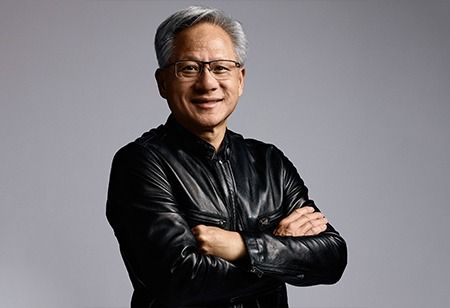
Under the visionary leadership of Jensen Huang, Founder and CEO of NVIDIA, the company has pursued a strategy that extends far beyond semiconductor innovation. Rather than competing solely in the chip market, NVIDIA is building a comprehensive ecosystem that integrates computing, networking, storage, software, and cloud infrastructure into a unified platform. This strategic shift has positioned the company as a full-stack AI infrastructure provider—one capable of powering the next generation of AI applications, AI agents, physical AI systems, and sovereign AI initiatives.
As AI adoption accelerates across industries and nations, NVIDIA's approach is proving to be a defining advantage. The company is not merely supplying the tools for AI development; it is creating the foundational architecture upon which the AI economy will operate.
Building an AI Empire
For decades, NVIDIA's success was rooted in its GPU technology, which revolutionized graphics processing and later became indispensable for AI training. However, as artificial intelligence matured, NVIDIA recognized a critical reality: organizations needed far more than powerful chips to build and scale AI systems effectively.
Modern AI requires an interconnected ecosystem of high-performance computing, advanced networking, optimized storage, sophisticated software frameworks, cloud infrastructure, and operational tools. Delivering individual components was no longer enough. The future belonged to companies capable of integrating every layer of the technology stack.
 This realization led NVIDIA to embrace a broader vision—transforming itself into the architect of AI factories.
These AI factories are large-scale infrastructures designed to convert data into intelligence, enabling organizations to train, fine-tune, and deploy AI models efficiently. Similar to how industrial factories transformed raw materials into finished products during previous economic revolutions, AI factories transform vast amounts of data into actionable intelligence, automation, and business value.
Jensen Huang has consistently emphasized this vision, stating that every company and every country will require AI factory infrastructure to remain competitive in the digital economy. NVIDIA's strategy reflects this belief, positioning the company at the center of global AI development.
Expanding the AI Cloud
One of the most significant pillars of NVIDIA's expansion strategy is the NVIDIA AI Cloud ecosystem, a rapidly growing network of purpose-built AI clouds designed to meet the unprecedented demand for AI computing resources.
The explosive popularity of generative AI, agentic AI, and large language models has created an enormous appetite for computational power. Every AI query, recommendation, prediction, or autonomous action generates tokens that require processing. As token demand grows exponentially, organizations are searching for scalable infrastructure capable of supporting these workloads.
NVIDIA AI Clouds address this challenge by combining the company's accelerated computing platforms, advanced networking technologies, and AI software into integrated cloud environments. Rather than offering isolated hardware components, NVIDIA provides a complete infrastructure framework that enables cloud providers, enterprises, startups, and governments to deploy AI at scale.
This ecosystem serves a diverse range of applications, including model training, inference, fine-tuning, agentic AI, physical AI, and sovereign AI deployments. Importantly, it enables organizations to access AI infrastructure closer to where data, developers, industries, and end users are located, reducing latency and improving operational efficiency.
Also Read: Industry, Academia and Government Synergy Disentangling Societal Challenges
The result is a global AI infrastructure network capable of supporting both frontier AI research and practical enterprise applications.
The Leadership Blueprint
A defining characteristic of NVIDIA's growth strategy is its emphasis on ecosystem leadership rather than isolated product leadership.
The company's AI Cloud ecosystem spans nearly every geography, supporting enterprises, startups, national AI programs, research institutions, telecommunications providers, and software developers. This collaborative approach allows NVIDIA to create value far beyond its own product portfolio.
Regional expansion has accelerated across Asia-Pacific, Australia, Africa, Europe, and the Americas. Recent partnerships have extended NVIDIA AI Cloud capabilities to six continents, creating unprecedented opportunities for local AI development and sovereign AI initiatives.
This ecosystem strategy reflects a leadership philosophy centered on long-term enablement rather than short-term transactions. By empowering partners to build AI factories tailored to regional and industry-specific needs, NVIDIA strengthens its position as the foundational platform provider for the AI era.
In an interaction with CEO Insights, Vishal Dhupar, Managing Director, Asia South at NVIDIA, highlighted the transformative role of artificial intelligence in solving complex computational challenges. Emphasizing how AI is reshaping problem-solving capabilities across industries, he said, “AI creates new avenues to solve these high-performance computing problems. We gather facts from the ground, extrapolate the data, and create simulations to determine the underlying issues. When we infuse it with AI, we can now make much larger simulations, which give you solutions and help determine the action plans to execute those solutions. That's a great advantage that makes it a need of humanity.”
 Beyond technological innovation, NVIDIA's success is also rooted in a leadership philosophy that prioritizes people, collaboration, and continuous growth. Reflecting on his leadership approach, Vishal shared, “I always believe a leader is a coach who sees the conditions against an objective that needs to be achieved. A leader brings talented people in to create a team and enable them to find their best version. It's like the symphony—like how the conductor of the symphony brings together experts of different instruments toward a common objective. The harmony helps you to produce the desired outcomes. More importantly, it also facilitates growth on an individual objectives level. This is precisely where a coach comes in, and it is something that highly inspires me. As a coach, I believe one of my key strengths is my ability to understand the present and what is required to make that transition to the future.”
This leadership mindset mirrors NVIDIA's broader transformation from a leading GPU manufacturer into a full-stack AI infrastructure powerhouse. The company's journey demonstrates the importance of anticipating technological shifts before they become mainstream. Recognizing early that the future of artificial intelligence would require far more than advanced chips, NVIDIA strategically expanded its portfolio to include integrated computing, networking, storage, software, and cloud infrastructure solutions.
Equally significant is the company's ecosystem-driven approach. By empowering cloud providers, enterprises, developers, governments, and AI innovators, NVIDIA has created a collaborative framework that accelerates AI adoption on a global scale. This ability to bring together diverse stakeholders around a shared vision reflects the same principles of teamwork and orchestration that Vishal describes in his leadership philosophy.
The Rise of AI Factories
At the heart of NVIDIA's vision lies the concept of AI factories. Traditional data centers were designed primarily for storing information and supporting enterprise applications. AI factories, by contrast, are purpose-built environments optimized for generating intelligence.
These facilities integrate high-performance computing systems, ultra-fast networking, advanced cooling technologies, AI software platforms, and operational management tools to maximize AI productivity.
NVIDIA's partners are increasingly adopting this model to support growing demand from enterprises, governments, and AI developers.
For example, Firmus Technologies is expanding its AI factory footprint across Australia and Southeast Asia. Through its Project Southgate initiative, the company is developing AI factories throughout Tasmania, Melbourne, South Australia, and New South Wales while emphasizing renewable energy, advanced cooling systems, and modular infrastructure.
Firmus leverages NVIDIA's accelerated computing platforms and reference architectures to accelerate deployment and improve efficiency. Its liquid-cooled HyperCube infrastructure exemplifies how AI factory design is evolving to meet the massive computational requirements of future AI workloads.
This collaboration highlights NVIDIA's role not merely as a technology supplier but as an infrastructure architect helping partners build the next generation of digital industrial capacity.
Agentic AI Revolution
The AI industry is entering a new phase characterized by autonomous AI agents capable of reasoning, decision-making, and executing complex tasks with minimal human intervention.
These agentic AI systems require significantly greater computational resources than earlier AI applications. They generate vast quantities of tokens and demand infrastructure capable of supporting continuous inference at scale.
NVIDIA's integrated platform strategy is specifically designed to address these emerging requirements.
By combining accelerated computing, networking, memory, storage, and software optimization, NVIDIA enables organizations to deploy AI agents efficiently while maintaining favorable economics.
This capability is increasingly important as enterprises seek to implement AI copilots, digital workers, intelligent automation systems, and customer-facing AI services.
Rather than viewing AI as a standalone application, NVIDIA views it as a continuously operating infrastructure layer embedded throughout organizations. This perspective positions the company to benefit from the growing adoption of agentic AI across virtually every industry.
Sovereign AI
As governments recognize AI's strategic importance, many are seeking to establish domestic AI capabilities while maintaining control over data, infrastructure, and regulatory compliance.
NVIDIA AI Clouds provide the technological foundation for these initiatives.
Regional AI clouds enable governments and regulated industries to deploy AI solutions while adhering to local regulations and sovereignty requirements. This capability is becoming increasingly important as countries seek to strengthen their technological independence and reduce reliance on foreign infrastructure.
By supporting national AI programs, NVIDIA is positioning itself not only as a commercial technology provider but also as a strategic partner in digital nation-building.
Also Read: Policy to Progress: India’s Semiconductor Ecosystem Taking Shape
This approach significantly expands the company's addressable market while reinforcing its role in shaping the global AI landscape.
NVIDIA DSX
A crucial enabler of NVIDIA's AI factory strategy is the NVIDIA DSX platform.
DSX provides a comprehensive suite of tools designed to simplify the design, deployment, and operation of AI factories.
The platform includes validated reference architectures, simulation capabilities, workload optimization tools, and lifecycle management systems.
DSX Sim allows organizations to model and validate AI factories before deployment, reducing implementation risks. DSX Flex dynamically adapts workloads to changing power conditions, improving operational efficiency. DSX MaxLPS enables power-constrained facilities to maximize computing capacity, potentially supporting up to 40 percent more GPUs. DSX OS automates lifecycle management at scale.
Together, these capabilities help cloud providers bring infrastructure online faster while maximizing performance and profitability.
The DSX platform exemplifies NVIDIA's commitment to delivering complete solutions rather than individual products.
NVIDIA's growth story underscores the value of long-term vision. While many technology companies continue to focus on individual products or point solutions, NVIDIA is building the foundational infrastructure required for the AI era. Through its AI factories, cloud ecosystem, and full-stack platforms, the company is enabling organizations worldwide to transform data into intelligence and innovation into scalable business outcomes.
Also Read: How Great Leaders Build High-Performance Workplace Cultures
Today, NVIDIA stands as far more than a semiconductor company. It is helping shape the future of AI by delivering the technologies, platforms, and ecosystems that power next-generation innovation. As enterprises, governments, and industries increasingly embrace AI, NVIDIA's integrated approach offers a blueprint for sustainable growth, technological leadership, and long-term value creation.
Looking ahead, the company's impact will likely be measured not only by the technologies it develops but also by the industries it transforms, the innovations it enables, and the intelligent future it helps build for organizations and nations across the globe.