

From Lab to Factory: The Untold Story of Deeptech Grit
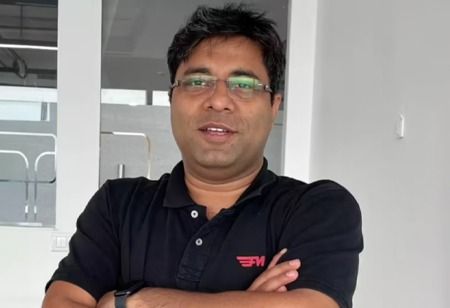
Sunil, a seasoned leader in startup ecosystems, driving investments in early-stage manufacturing and deeptech ventures. He offers sharp insights into funding gaps, the need for patient capital, and emerging sectors poised to influence India’s next wave of industrial innovation.
In an engaging interaction with CEO Insights India Magazine, Sunil shares his perspectives on the overlooked funding gaps in manufacturing-led deeptech, the need for patient capital beyond SaaS timelines, India’s readiness for global investment, and the structural shifts required to accelerate innovation, scale, and resilience in industrial ventures.
Where do you see the most critical funding gaps in manufacturing-led deeptech innovation?
The gap nobody talks about isn't in the funding round. It's in the six months after a founder proves the science and realises the real work hasn't even started yet. Tooling. Supplier qualification. Process consistency. Regulatory certification. None of it fits a standard venture timeline, and none of it attracts standard venture capital.
Indian deeptech raised $1.65 billion in 2025, up from $1.1 billion the year before, but that number feels disconnected from what manufacturing founders actually experience. The ones building in advanced materials, precision components, and industrial hardware aren't seeing that capital. They're bootstrapping pilot runs and watching software-led competitors raise ten times their round in half the time. Until financing instruments are built specifically for the prototype-to-production stage, the ecosystem will keep losing companies that should have become industries.
Why do deeptech ventures require 2 to 3 times more investment cycles than SaaS startups?
Ask that question to someone who has only ever invested in software and you'll get a theory. Ask it to someone who has watched a manufacturing founder rebuild a process from scratch at 11pm because a single parameter shift invalidated three months of yield data and you'll get the truth.
Also Read: Best 5 Management Consulting Firms in India Driving Business Growth
Physics doesn't iterate. Every stage of the manufacturing journey, prototyping, regulatory approvals, supplier readiness, yield stabilisation, demands fresh capital and carries risk that looks nothing like a software sprint. Deeptech manufacturing startups take seven to ten years to reach commercial scale. Software takes three to five. The founders who needed four funding rounds before unit economics worked weren't failing. They were doing exactly what the work required. The tragedy isn't that they needed more time. It's that the ecosystem wasn't built to hold them through it.
How can India better position its deeptech startups to attract long-term international capital?
Global capital is already looking at India. The question is why it keeps looking and not landing. US and Indian VC firms including Accel, Blume Ventures, and Celesta Capital have already committed nearly $2 billion to Indian deeptech.
What India now needs to do is build the infrastructure that prepares founders for those rooms. Stronger IP frameworks that make process knowledge defensible. Industry-linked validation environments where manufacturing startups can benchmark against international standards. Founder development programmes built specifically around capital readiness, not just product readiness.
Also Read: Policy to Progress: India’s Semiconductor Ecosystem Taking Shape
The gap between a great manufacturing startup and a closed funding round is almost never the technology. Fix the preparation infrastructure and the capital conversation changes completely. The founders who are ready don't chase global capital. They stop having to.
What signals indicate manufacturing-led sectors could define the next funding wave?
The reports will tell you eventually. The factory floors are already showing it now. Five years ago manufacturing deeptech founders were optimising existing processes. Today they're building entirely new categories, materials that didn't exist, fabrication methods with no incumbent, automation architectures that make legacy equipment look like a different century.
That shift from incremental to foundational precedes every major funding wave. Deeptech now represents 15 percent of India's overall VC activity, up from just 4% in 2016. Total deeptech funding reached $2.1 billion across 289 deals in 2025. The wave isn't coming. It's already forming under everyone's feet.
Also Read: Fuel Supply to LPG: PM Modi Addresses LS Amid West Asia Conflict
What structural changes are needed to bridge innovation, capital, and commercialisation in Indian manufacturing?
Three failures. Same three every time. The scaleup funding gap quietly destroys more promising companies than any technology risk ever could. Founders with working pilots and purchase orders in hand with no instrument to bridge them to production. That's a system problem, not a founder problem. The government's $1.15 billion Fund of Funds and Rs 1 lakh crore RDI scheme are steps forward but the mid-stage gap is still swallowing companies whole. Public procurement is the second failure. A founder with measurably superior technology spent 22 months in a procurement process that nearly ended the company before a rupee of revenue arrived.
Third, exceptional engineering research keeps dying in journals when it belongs on factory floors. IIT Madras launched over 100 deeptech startups in the year ending March 2025. That pipeline exists. The commercialisation infrastructure to match it doesn't yet. Fix all three and capital responds immediately.
What mindset and strategy would you advise deeptech manufacturing founders navigating long cycles and uncertainty?
Stop waiting for the journey to feel manageable. It won't. Build your company for the version of events where everything goes wrong simultaneously, because in manufacturing, eventually it does. Plan capital for eighteen months longer than you think you need. Stay closer to your customer during development than feels necessary. Protect your process IP from day one, not when you can afford to. And choose investors who have stood on a factory floor during a yield crisis without panicking, because that moment will come and who is sitting across from you when it does matters enormously.
The founders who define this next chapter aren't the most technically brilliant people in the room. They're the ones who were architected to survive the third crisis. That resilience is rarer than good technology. And in the long run it's worth considerably more.