

Fujiyama’s Solar Cell Plant to Boost India’s Green Supply Chain
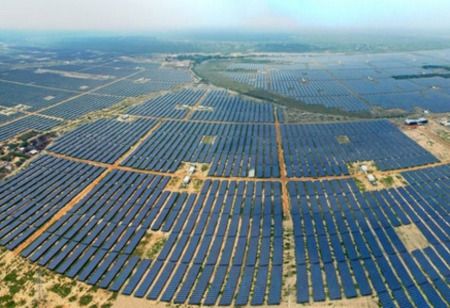
Fujiyama Power Systems is establishing a 1.2 GW solar cell facility in Ratlam, Madhya Pradesh, with commercial production anticipated to begin utilizing advanced TOPCon technology by the conclusion of the current financial year, according to the company's managing director Pawan Garg.
The greenfield initiative, with an investment of approximately Rs 350-400 crore, aims to lessen the company's reliance on open-market cell acquisitions and bolster its local solar manufacturing network.
Also Read: Ather Energy Targets Asia and Latin America With Export Push
When operational, the facility will raise Fujiyama’s overall solar cell production capacity to 2.3 GW. During a discussion that the company is operating a cell plant with a capacity of 1.1 GW in Dadri, Uttar Pradesh.
The Ratlam initiative aligns with Fujiyama’s 2030 vision of transforming into a comprehensive renewable energy firm. Garg mentioned that the facility would enhance the company's value chain and assist in lowering input expenses for solar module production. Fujiyama currently possesses a total module manufacturing capability of 3.6 GW, distributed among a 2 GW facility in Ratlam, a 1.2 GW plant in Dadri, and a 0.4 GW unit in Noida.
Solar panels need cells, and the production of cells relies on wafers and ingots. Fujiyama's intended investment thus goes beyond just the immediate increase in cell capacity. The company announced plans to set up ingot and wafer manufacturing lines in the future, aligning its growth with government initiatives to create a domestic solar equipment framework.
The new facility will employ Tunnel Oxide Passivated Contact, known as TOPCon, technology. TOPCon cells exhibit greater efficiency compared to traditional Passivated Emitter and Rear Cell, also known as PERC, designs.
Also Read: Integrum Energy Infrastructure Files Papers With SEBI
The technology is progressively embraced as producers strive for greater power output from solar panels while enhancing manufacturing capabilities.
The growth occurs as India's Approved List of Models and Manufacturers, known as ALMM, focuses more on local quality and reliability criteria for solar equipment utilized in the nation's projects. ALMM I addressed modules, whereas ALMM II broadened the framework to include solar cells. According to the company's description of the policy framework, ALMM III, scheduled for 2028, has been expanded to include ingots and wafers.
Fujiyama stated that the policy aims to encourage domestic production, lessen reliance on imports, and enhance quality throughout the solar value chain. The Ratlam plant will enhance the company’s current offerings in rooftop solar solutions, solar panels, inverters, and battery systems, which feature both lithium-ion and tubular batteries.
Also Read: Omara Ventures India Files RHP Ahead of Rs.41.99 Crore IPO
The firm announced a revenue of Rs 2,654 crore in FY26, featuring an EBITDA of Rs 490 crore and a net profit of Rs 304 crore. The upcoming milestone for the new project is to initiate solar cell production by the conclusion of the current financial year, succeeded by the planned expansion into ingot and wafer manufacturing as an aspect of the company’s long-term strategy.