

India EV Battery Demand to Grow Tenfold to 200 GWh by 2032: IESA
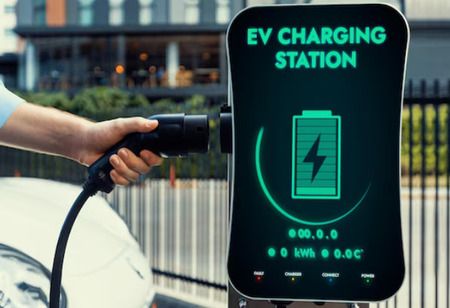
The demand for electric vehicle (EV) batteries in India is anticipated to expand significantly, multiplying by a factor of ten—from 20 GWh in 2025 to 200 GWh by 2032—according to the industry organization India Energy Storage Alliance (IESA).
Referencing a study, IESA indicated that the prospects for electric vehicles (EVs) in India extend beyond merely the manufacturing of vehicles.
Also Read: Tata Steel Expands Partnership With Google Cloud
The most significant strategic advantages may be found in the localization of components and the advancement of supply chains, as India aims to establish itself as a global center for manufacturing.
In collaboration with Customized Energy Solutions (CES), the India Energy Storage Alliance (IESA) is poised to unveil the study report entitled ‘India EV & EV Component Market Outlook 2025-2034’ during the 12th edition of India Energy Storage Week (IESW), scheduled to take place from July 8th to 10th in the nation's capital.
The research indicates that India's demand for electric vehicle batteries is anticipated to escalate significantly, increasing from 20 GWh in 2025 to 200 GWh by 2032, which represents a tenfold surge, according to the industry association.
Also Read: Delhi Upgrade ICT Labs, Add Digital Labs in Government Schools
The electric vehicle sector in the nation stands on the brink of a profound transformation. Initially propelled by governmental policy, this shift is evolving into an expansive industrial framework that includes batteries, motors, power electronics, advanced chemical technologies, localized manufacturing, and substantial investments in a resilient supply chain, the IESA states.
“With India’s EV market entering an era of unprecedented growth and battery demand projected to rise tenfold by 2032, the industry’s next leap will be driven by localisation, advanced chemistry, and resilient supply chains,” says Debmalya Sen.
The report observed that electric vehicle sales in India surpassed 2.5 million units by 2025, comprising 1.5 million two-wheelers and 0.7 million three-wheelers, which underscores the swiftly transforming landscape of adoption and production within this sector.
The report encompasses a comprehensive range of topics, including the future prospects of the electric vehicle market, projections for battery demand, advancements in battery chemistry, trends in component manufacturing, developments within the supply chain, and a strategic perspective for the industry extending to the year 2034.
Vinayak Walimbe, states, “This report aims to give all stakeholders, from OEMs to investors, the strategic direction required to capitalize on these emerging opportunities.” Initial findings indicate the market is approaching an inflexion point. While electric two-wheelers continue to lead volumes, the next phase of growth is expected from passenger electric cars and light commercial fleets.
The report reveals substantial technological transformations that are currently in progress. Within the domain of battery chemistry, Nickel Manganese Cobalt (NMC) presently holds a dominant position in the electric two-wheeler sector, capturing 70 percent of the market share.
Also Read: India’s Power Transmission Sector to See INR 9T Capex by 2032
Meanwhile, Lithium Iron Phosphate (LFP) chemistry is swiftly making advances in other market segments. It delves deeper into the prospective advancements and developments of LMFP, solid-state, sodium-ion, and other emerging cell technologies up to the year 2032.
In the realm of motor technology, BLDC motors dominate the two-wheeler sector, representing 71 percent of the market share. Contrarily, PMSM motors have become the favored choice for electric passenger vehicles, capturing a substantial market share exceeding 90 percent.