

Food Safety in Quick commerce: The New Leadership Challenge
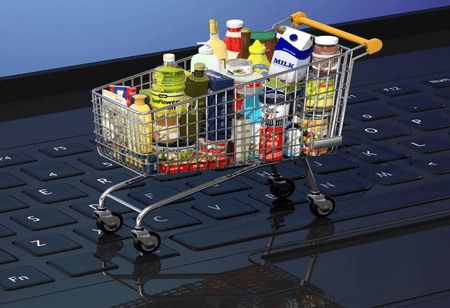
As India’s growing e-commerce and quick-commerce ecosystem transforms the way consumers buy food, food safety has emerged as a critical leadership imperative. The article explores the importance of governance, technology, traceability, and supply-chain accountability, while bringing expert perspectives on how stronger food-safety leadership can protect consumers, strengthen trust, and create a more responsible digital food ecosystem.
Quick commerce has been a game-changer for Indian consumers. In the blink of an eye, one order everyday essentials, a big part of which is food products. This convenience is built on the backs of a well-planned network of warehouses, dark stores, suppliers, technology platforms, and delivery workers.
But who is responsible for ensuring the quality of the food products throughout that journey?
Questions regarding food safety have gained urgency as regulators intensify scrutiny of India’s expanding e-commerce and quick-commerce sector. Recent enforcement actions in Karnataka have highlighted concerns ranging from prohibited food listings to expired, mislabelled, and improperly stored products.
Karnataka authorities suspended the food licenses of major quick-commerce platforms, Amazon, Swiggy Instamart, and BigBasket after Datura fruits and seeds were listed as food products. Officials also sealed a Zepto warehouse in Hoskote over reported unhygienic food handling and storage, along with labelling and misbranding concerns.
Authorities later reported seizing expired and incorrectly labeled food products worth Rs 1.38 crore from Amazon and Instamart facilities, alongside medicines worth about Rs 4 lakh. An Amazon facility in Lingarajapuram was sealed, while an Instamart facility was shut following reported violations.
These incidents expose a broader accountability challenge. A digital food order can pass through multiple businesses before reaching the consumer, making food safety a shared responsibility across the supply chain.
For business leaders, this means food safety must move beyond back-office compliance and become part of governance across technology, operations, supply chains, and consumer trust.
Together, these developments show why food safety must be embedded across the digital food ecosystem, from product sourcing to the consumer’s doorstep.
From Shelves to Screen: Rethinking Food Safety in E-commerce
A supermarket gives consumers a physical opportunity to inspect food before purchasing it. They can read the label, check the expiry date, examine the packaging, and decide whether the product is suitable.
E-commerce removes much of that physical interaction.
The first impression of a product is usually a photograph, title, description, price, nutritional information, rating, or promotional claim. Consumers may not see the actual package until after payment has been completed.
This changes the meaning of food-safety responsibility.
A digital product listing effectively becomes part of the consumer's purchasing environment. If it contains incomplete information, inaccurate descriptions, misleading claims, or prohibited products, the issue is not merely a technology error. It can have direct implications for consumer safety.
The Datura controversy demonstrates this clearly. The product was reportedly presented through online platforms as a food product. Karnataka's decision to suspend the food licences of Amazon, Instamart, and BigBasket shows that regulators are increasingly examining what digital platforms enable consumers to purchase, not just what is physically stored inside their facilities.
For leadership teams, this creates a new responsibility. Product information should be treated as a controlled business asset. Platforms need systems that can identify restricted categories, verify seller information, flag questionable listings, and remove problematic products quickly.
The challenge becomes particularly complex when platforms host thousands of sellers and millions of products. Human monitoring alone cannot provide sufficient oversight at that scale.
Digital commerce therefore requires food-safety governance that begins before a product reaches the customer. Supplier verification, product authentication, accurate descriptions, labelling checks, and controls over restricted categories need to become part of the digital operating model.
The Hidden Quality Risks Behind Quick Commerce
 Mythili G Nirvan, Managing Director, PrachaR Media Solutions & Co-founder, MyAnsi, says, “While buying groceries online offers convenience, ordering through storefronts exposes consumers to risks that go unnoticed. Pricing algorithms may adjust costs based on location, purchase history, and shopping habits, making price transparency difficult. Automated substitutions can create concerns when products do not meet allergy or dietary requirements. Purchase histories can provide platforms with insights into consumer lifestyles and spending patterns.”
“The shift limits the ability to inspect fresh produce. Fast-paced order picking can prioritise speed over ripeness and expiry dates. Online interfaces may encourage spending through pre-checked subscriptions and additions. Consumers must balance convenience with privacy, cost, and quality,” Mythili adds.
Quick commerce has transformed consumer expectations. Products that once required a planned grocery trip can now arrive at the doorstep within minutes. However, this speed creates operational pressure, particularly within dark stores where products are received, stored, picked, packed, and dispatched at high frequency.
Efficiency cannot come at the expense of safety. Products must be stored appropriately, expiry dates monitored, packaging kept intact, and perishable goods maintained under suitable temperature conditions. Food and non-food products also require proper segregation, while storage areas must remain clean and protected from pests and contamination.
The recent action against a Zepto warehouse in Hoskote highlights why these fundamentals remain important in technology-driven retail. The regulatory expectation remains the same whether food is sold through a traditional supermarket or a technology-enabled delivery platform.
This presents a crucial leadership lesson: technology may change how food is sold, but it does not change the physical realities of food. Milk still requires appropriate storage, fresh produce needs hygienic handling, and packaged food has an expiry date.
Quick commerce therefore requires leaders to establish clear boundaries around what cannot be compromised in pursuit of speed. Delivery performance can be measured in minutes, but food safety depends on compliance, traceability, hygiene, quality, and risk prevention.
The two objectives do not have to conflict. Automated inventory systems can prevent products close to expiry from being dispatched. Barcode scanning can reduce manual errors. Digital records can identify where batches are stored, while automated alerts can flag products requiring immediate attention.
The objective should be to design safety into the operating system rather than treat it as an inspection after the process is complete.
Also Read: Beyond the Kitchen: Why Food Safety Is Now a Hospitality Leadership Priority
Building Accountability Across the Digital Food Supply Chain
One of the biggest challenges in e-commerce food safety is determining who owns the problem.
A manufacturer produces a product. A seller supplies it. A logistics provider transports it. A warehouse stores it. A digital platform displays it, and a delivery worker brings it to the customer.
When something goes wrong, each party can potentially point to another part of the chain. Leadership teams need to close this accountability gap.
 As Prathima Manohar, Co-chair, Urban Vision and Director, Paradise Group & GoodPass, says, “We can get food delivered in 10 minutes. But can we verify in 10 seconds that it is safe?” She adds that as e-commerce brings everyone from large restaurants to neighbourhood kitchens and street-food vendors online, “safety has to keep pace.”
Prathima suggests that India could introduce a simple “Safe to Sell Online” standard, including verified FSSAI registration, visible hygiene ratings and periodic safety checks for sellers, with platforms responsible for verification. For smaller vendors, certified food zones with shared clean water, waste management and safe storage could make compliance more affordable.
Every stage should have defined responsibilities. Supplier onboarding should include verification of licences, product information, quality standards and compliance history. Contracts should establish clear food-safety obligations.
Warehouses should maintain procedures for receiving, storing, rotating and removing products. Technology platforms should establish controls over product listings and restricted categories. Third-party logistics providers should also be integrated into food-safety governance rather than treated solely as transportation partners.
This is especially important when a warehouse is operated by an external logistics company. The consumer sees the platform’s brand, while the physical facility may involve another operator. Outsourcing therefore cannot create ambiguity around accountability.
Food safety should also become a board-level consideration. Senior executives need visibility into food-safety performance alongside revenue, customer acquisition, delivery times and profitability.
Useful leadership metrics could include expired products detected, labelling discrepancies, supplier compliance rates, food-safety complaints, temperature deviations, product recalls, warehouse hygiene scores, corrective-action closure times, restricted products removed from platforms and traceability response times.
These metrics can turn food safety from an abstract compliance principle into a measurable business responsibility.
The objective is not to create more bureaucracy but to identify weaknesses before they become consumer incidents. Recent enforcement action demonstrates why this matters. Seizures of expired and incorrectly labelled products from online-platform facilities show the importance of stronger traceability, inventory controls and supplier oversight.
A platform cannot rely solely on the assumption that products entering its network are compliant.
Prathima also points to Singapore’s food e-commerce standard as a useful model for India, noting that it recognizes that food safety does not stop with the restaurant or seller. Expectations extend across sellers, platforms and delivery partners, covering handling, delivery, traceability and recalls. “If we can track an order to our doorstep, we should be able to track its safety too,” she says.
Food safety also extends to marketing and consumer communication. A product should not create one impression through its packaging and another through digital advertising. As India debates stronger front-of-pack warnings for packaged foods high in added sugar, salt and saturated fat, regulatory, marketing, legal and product teams will need to work more closely.
The challenge is particularly significant online because product descriptions can be changed quickly and replicated across marketplaces, websites, advertisements and social-media channels. Strong governance is therefore essential to ensure that approved product information remains accurate and consistent.
Also Read: AI, Traceability, and the Future of Food Supply Chains
Technology as a Catalyst for Safer Food Commerce
Technology is often presented as the engine of quick commerce. It should also become one of its strongest food-safety tools.
Digital traceability can provide businesses with information about a product's journey from supplier to consumer. Inventory systems can track batches and expiry dates. Barcode and QR-based systems can improve identification. Internet of Things sensors can monitor temperature-sensitive products.
Artificial intelligence and analytics can strengthen these capabilities further. A platform managing millions of transactions can analyze operational data to identify risk patterns. Repeated complaints linked to a supplier can trigger a review. Unusual levels of expired inventory can prompt investigation, while recurring quality complaints can help identify whether the problem lies with sourcing, storage, packaging, or delivery.
However, technology cannot replace responsibility.
A sophisticated system is ineffective if employees ignore alerts or inaccurate data enters the system. The real challenge is combining technology with clear processes, reliable data, and accountable leadership.
Companies should also move from reaction to prevention. Regulatory inspections are an important enforcement mechanism, but businesses should not depend on authorities to identify their weaknesses.
The more mature approach is to map the food-supply chain and identify potential failure points before products reach consumers. At the supplier stage, the focus should be on verification and documentation. At the warehouse stage, it should shift to hygiene, storage, inventory rotation, and traceability. At the digital stage, it should involve product information and listing controls. At the delivery stage, businesses need to consider packaging, temperature, handling, and time-sensitive products.
This creates a continuous safety framework.
Instead of asking, “Did we pass the last inspection?” leaders should ask, “Where could the next failure occur?”
Technology can support this preventive approach, but organizational culture ultimately determines whether it works. Employees need to understand that food safety is not simply the responsibility of a quality manager.
A warehouse employee should feel empowered to remove a damaged product. A procurement manager should question incomplete supplier documentation. A technology employee should understand the implications of an inaccurate product listing, while a marketing executive should recognize the importance of responsible food claims.
If employees are rewarded only for speed and order volumes, safety can unintentionally become secondary. If quality, compliance, transparency, and consumer protection are included in performance expectations, employees receive a stronger message about organizational priorities.
Food-safety culture therefore begins at the top.
Also Read: AI Appreciation Day 2026: Executive Insights on Innovation & Trust
Leading the Next Era of Food Safety
Quick commerce is making the food supply chain faster, more decentralized, and increasingly digital. Recent regulatory actions against Amazon, Instamart, BigBasket, and Zepto demonstrate that food safety extends beyond physical stores to digital listings, warehouses, storage, and delivery.
For business leaders, food safety can no longer be treated as a back-office compliance function. It requires stronger supplier governance, real-time inventory visibility, accurate product information, rigorous warehouse standards, traceability, and clear accountability across the supply chain.
Consumer trust is central to this shift. Online shoppers cannot physically inspect most products before purchase and rely on platforms to provide safe, accurate, and compliant products. An expired product, misleading listing, or poorly maintained facility can therefore affect both consumer confidence and brand reputation.
Strong food-safety systems can become a business advantage by enabling transparent sourcing, reliable storage, accurate information, and rapid corrective action.
The future of e-commerce will not be defined solely by delivery speed, but by the ability to deliver food safely, transparently, and consistently.
As food moves from shelf to screen, responsibility must move with it. For India’s e-commerce and quick-commerce leaders, the challenge is to build food safety into the business before products reach consumers.